Party Conferences 2026
The Coalition for Global Prosperity has successfully completed its 2026 Party Conference Programme, hosting events across Reform UK, Liberal Democrat, Labour and Conservative Party Conferences.
Reform UK Party Conference
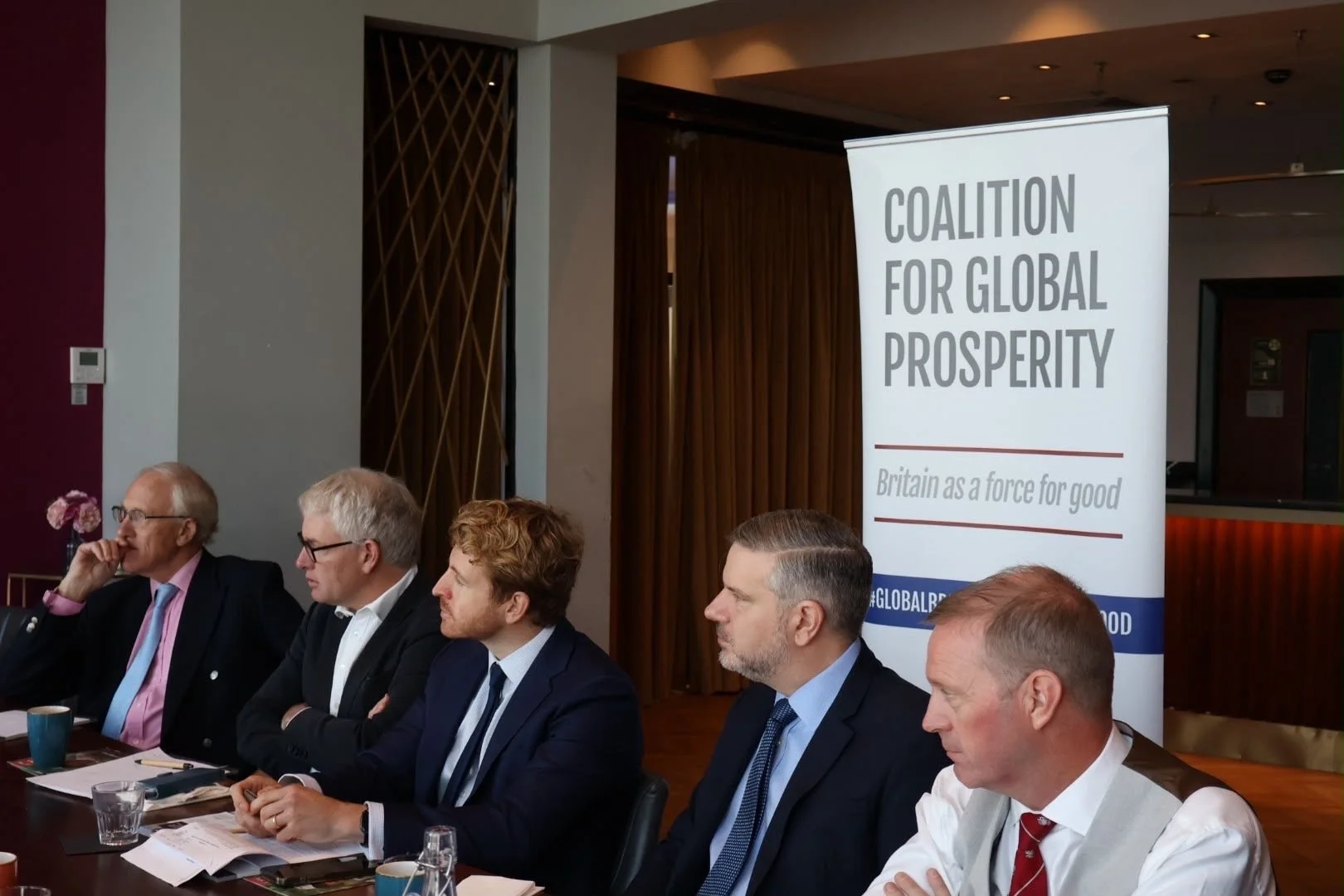
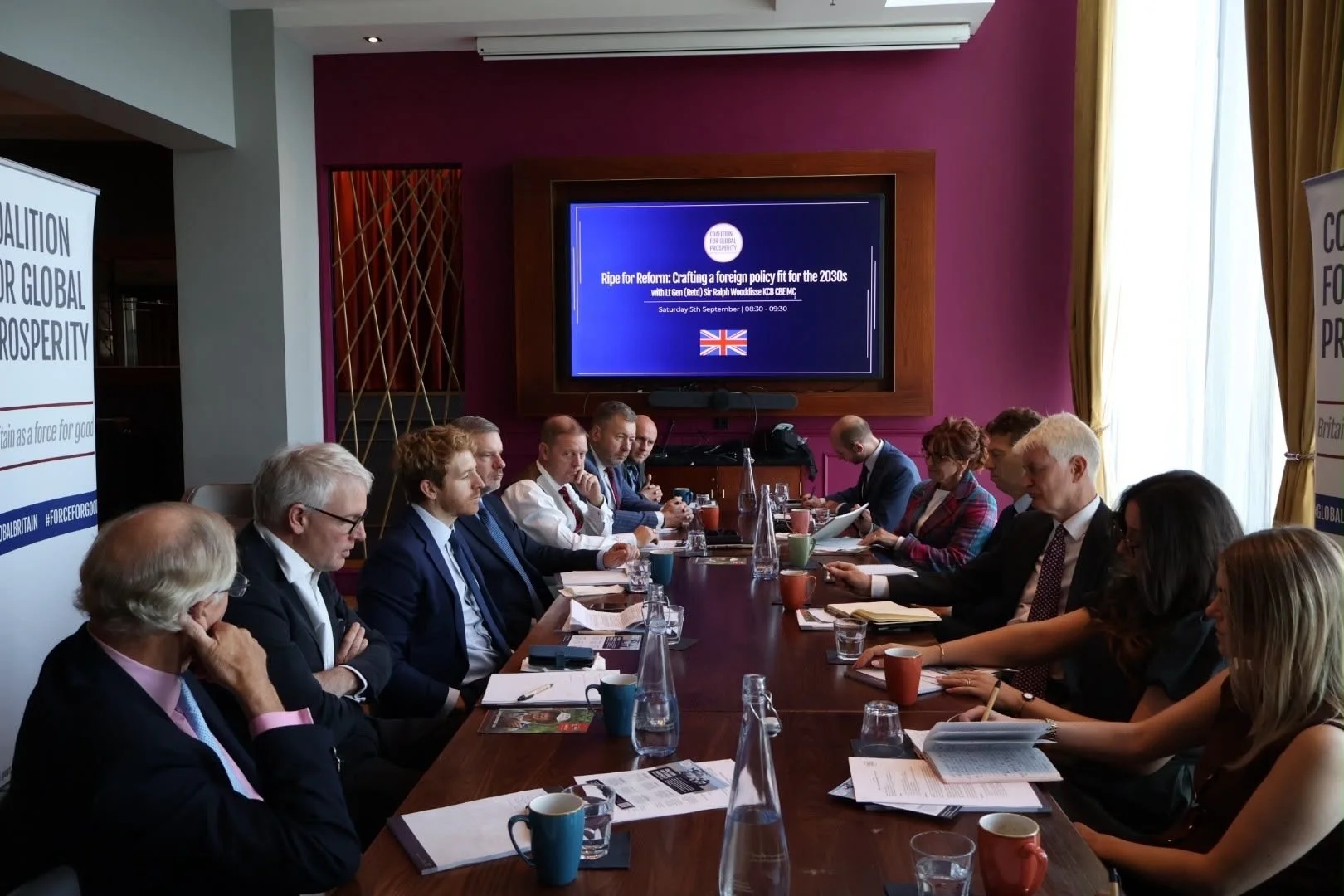
At the Reform UK Conference, CGP hosted a private roundtable on the major foreign policy and national security challenges the nation faces. ‘Ripe for Reform: Crafting a foreign policy fit for the 2030s’ brought together Reform UK elected representatives from Parliament, Holyrood and the Senedd with national security experts, including Lt Gen (Retd) Sir Ralph Wooddisse KCB CBE MC, former Commander of NATO's Allied Rapid Reaction Corps, to discuss how a future Reform UK government might navigate an increasingly complex, volatile and dangerous world.
Threats are evolving and proliferating at an unprecedented rate, and Britain faces a growing range of complex and interconnected challenges which risk undermining the very foundations of our security. Confronting these requires an honest appraisal of our capabilities, will and priorities, and the conversation was a valuable opportunity to explore how a Reform UK government would approach Britain’s security, economic prosperity and national resilience.
Liberal Democrat Party Conference
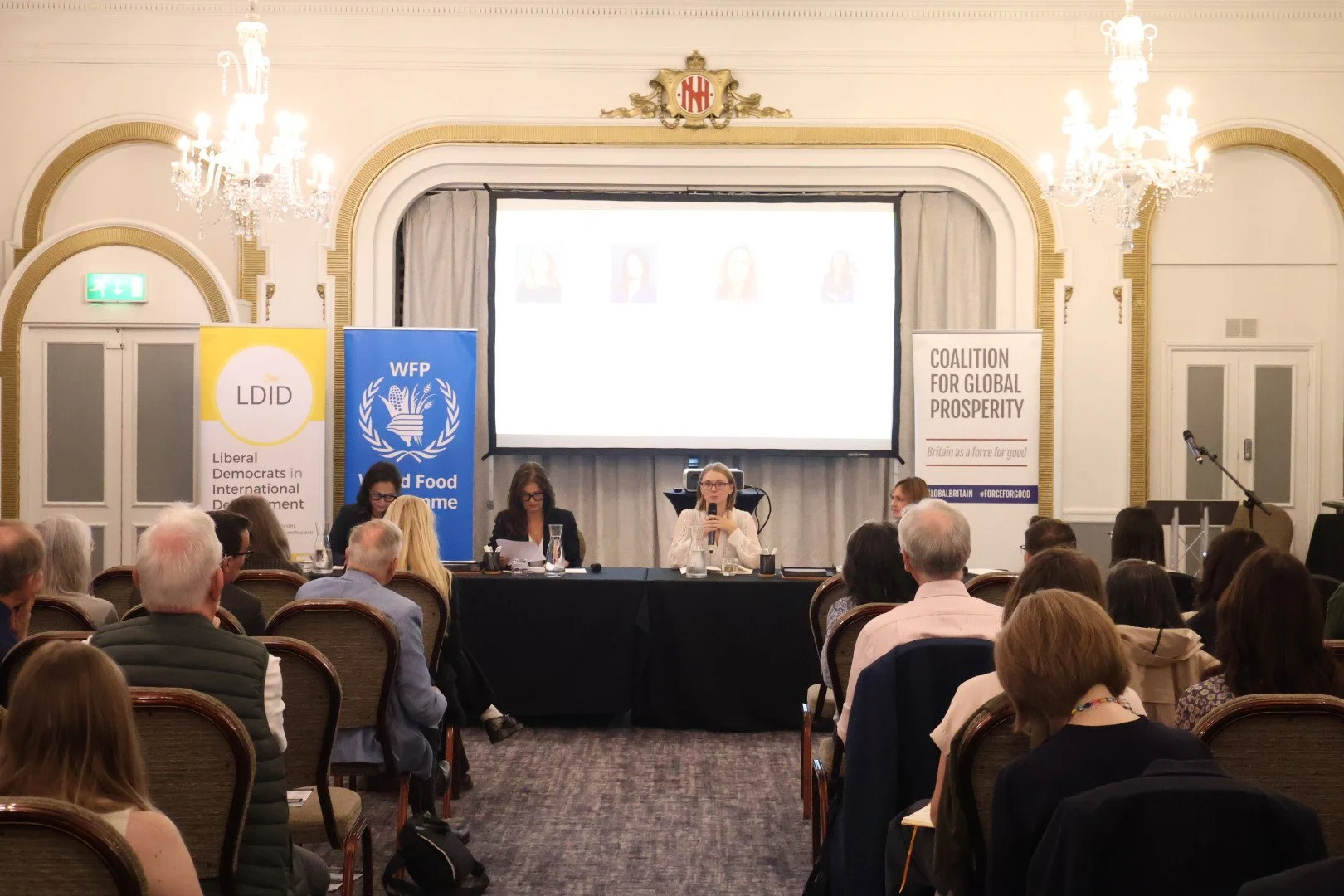
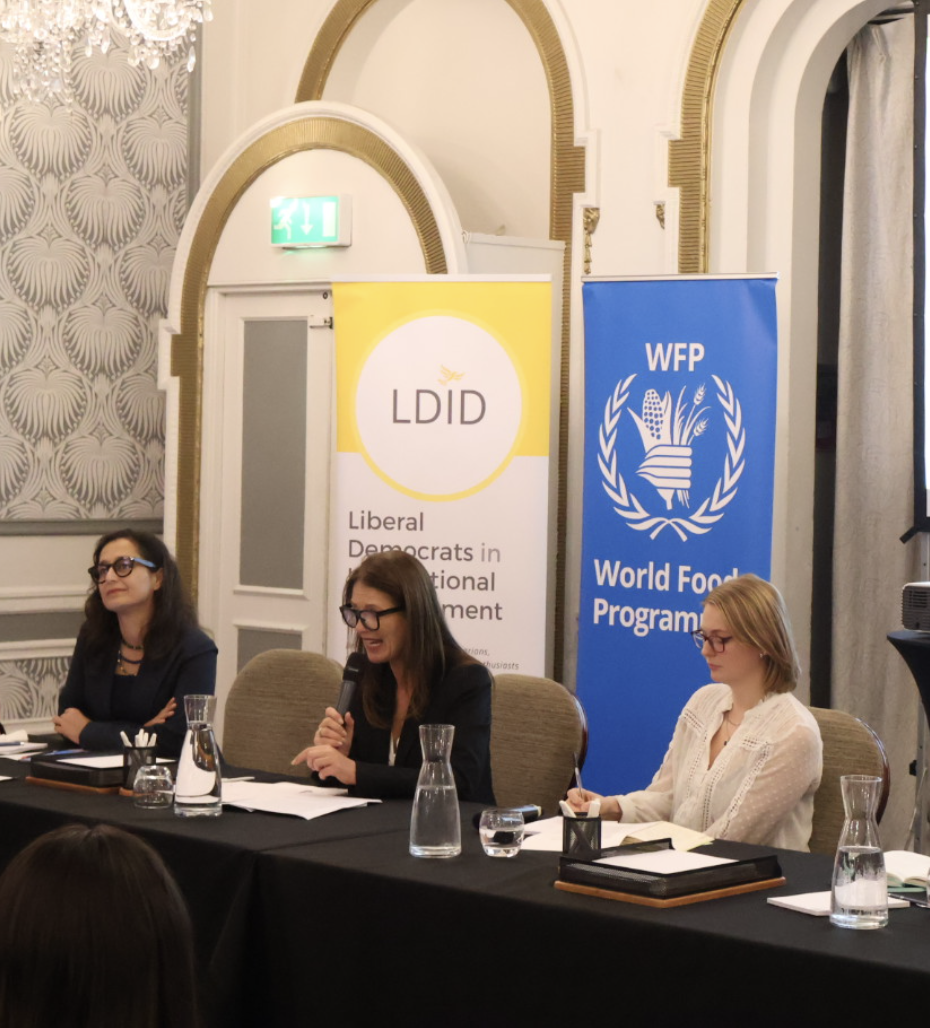
At the Liberal Democrat Party Conference in Brighton, the Coalition for Global Prosperity hosted a panel discussion in partnership with the Liberal Democrats in International Development (LDID) and the World Food Programme UK (WFP UK). ‘Protecting Aid in an Age of Populism’ featured panellists Monica Harding MP, MP for Esher and Walton and Member of the International Development Committee, Geraldine O'Callaghan, Director of WFP UK, and Dr Shandana Khan Mohmand, Research Fellow at the Institute of Development Studies. The panel discussed the consequences of reductions to development budgets, and how progressive parties can reclaim an internationalist narrative that connects with the public's priorities.
This event was followed by a private dinner ‘The UK in the New World Order’. As the Liberal Democrat Party develops a policy paper on a renewed approach to international development, this dinner brought together members of parliament and other stakeholders to reflect on its evolving ideas. To facilitate a productive conversation, Rosanne Palmer-White, as the penholder for the paper and CGP GAPP advisor seconded to Monica Harding MP’s office, provided an update on the work. During the dinner, she recorded the key points of the discussion to feed into the policy paper. Monica Harding MP, Liberal Democrat Spokesperson for International Development and member of the International Development Committee, opened the dinner as our guest of honour. Other parliamentarians who contributed to the discussion included Richard Foord MP, Helen Maguire MP, Lord Jeremy Purvis and Lord Jonny Oates.
Labour Party Conference
At the 2026 Labour Party Conference, the Coalition for Global Prosperity hosted two public panel discussions and a private dinner. The first panel was an ‘In Conversation’ with the Minister of State for International Development and Africa, Kirsty McNeill MP. Joined by Heather Stewart, Economics Editor at The Guardian, the overarching theme of discussion was the importance of a values-driven foreign policy. Topics included aid and multilateralism, finance and debt reform, targeted support for women and girls and a reinforcement of the UK’s commitment to support Ukraine.
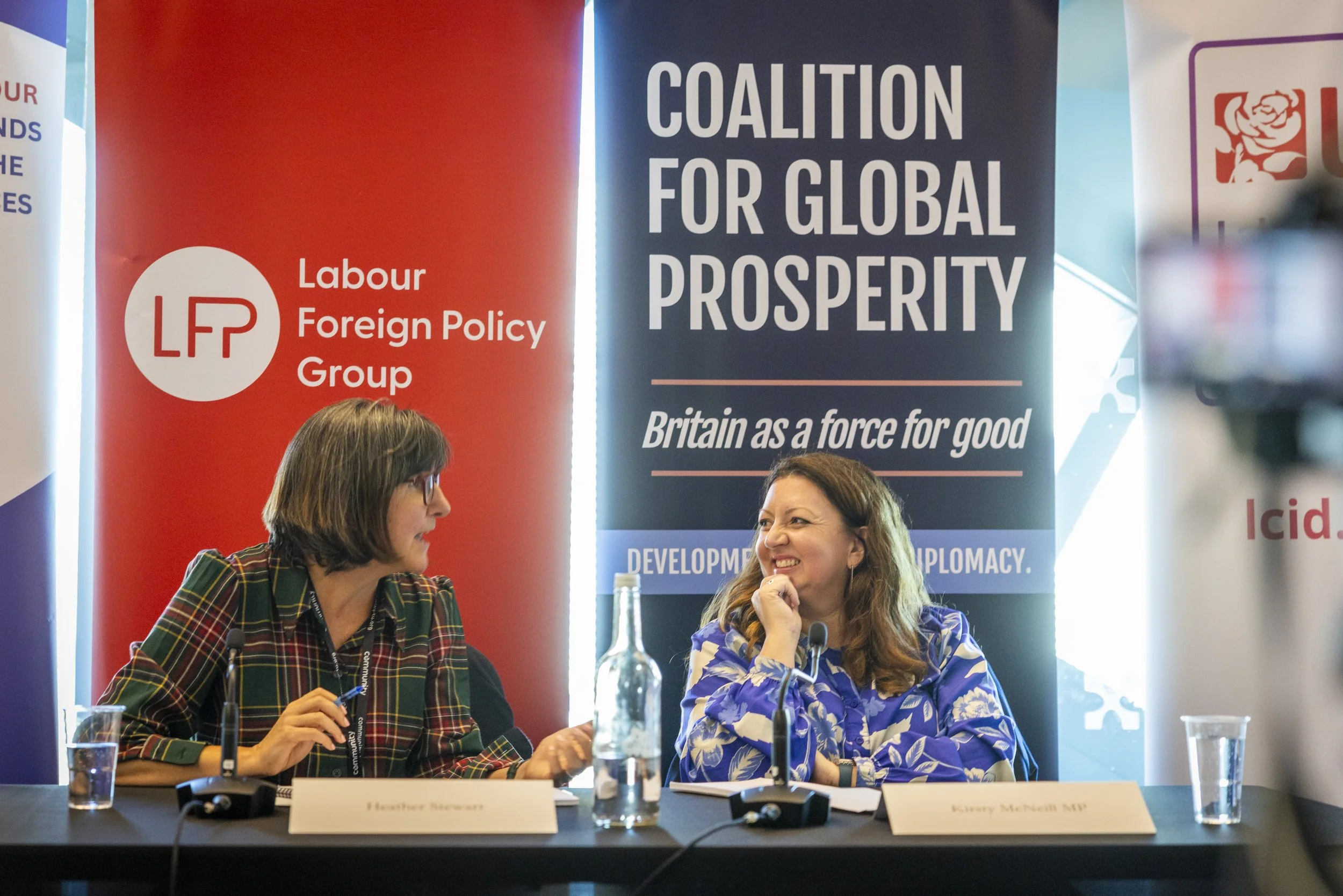
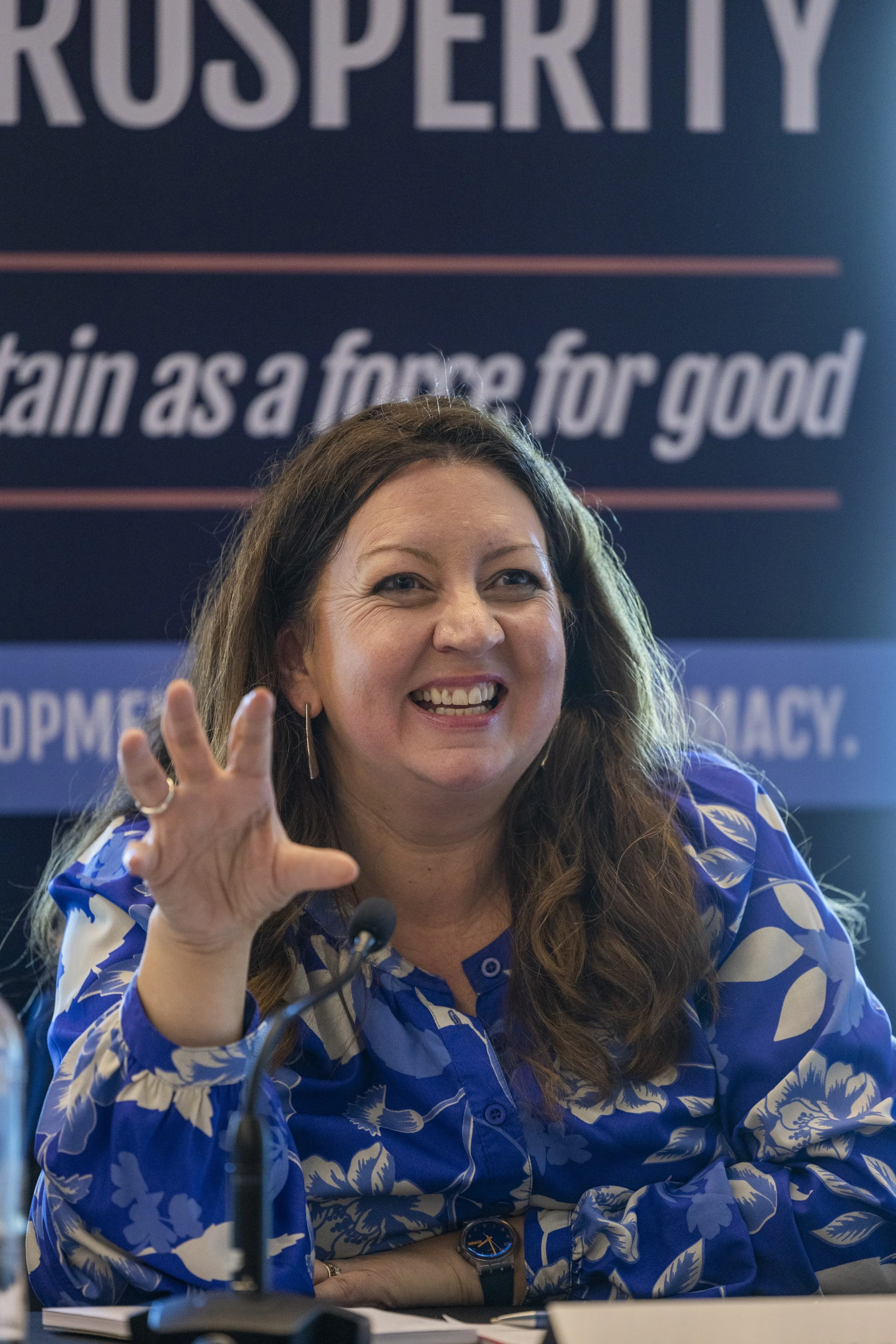
Reaffirming the UK’s commitment to multilateralism, Minister McNeill emphasised the continued importance of the UK’s Official Development Assistance (ODA) budget as an essential tool for mutual security, and called for anticipatory action in conflict prevention. The discussion highlighted the urgent need for finance and debt reform to support developing nations, and addressed the epidemic levels of violence against women and girls, outlining the need to use the UK’s diplomatic voice to prioritise access to education and push for investment opportunities.
In partnership with the Mines Advisory Group (MAG), CGP’s second panel, ‘Security in a Fragmented World: Rethinking Defence and Development’, brought together Calvin Bailey MBE MP, Minister for Veterans and People, Laura Kyrke-Smith MP, MP for Aylesbury, Fred Thomas MP, MP for Plymouth Moor View, Fiona Crack, Interim Global Director of BBC News and Director of BBC World Service, and Darren Cormack, Chief Executive of MAG, to explore how defence and development can reinforce each other.
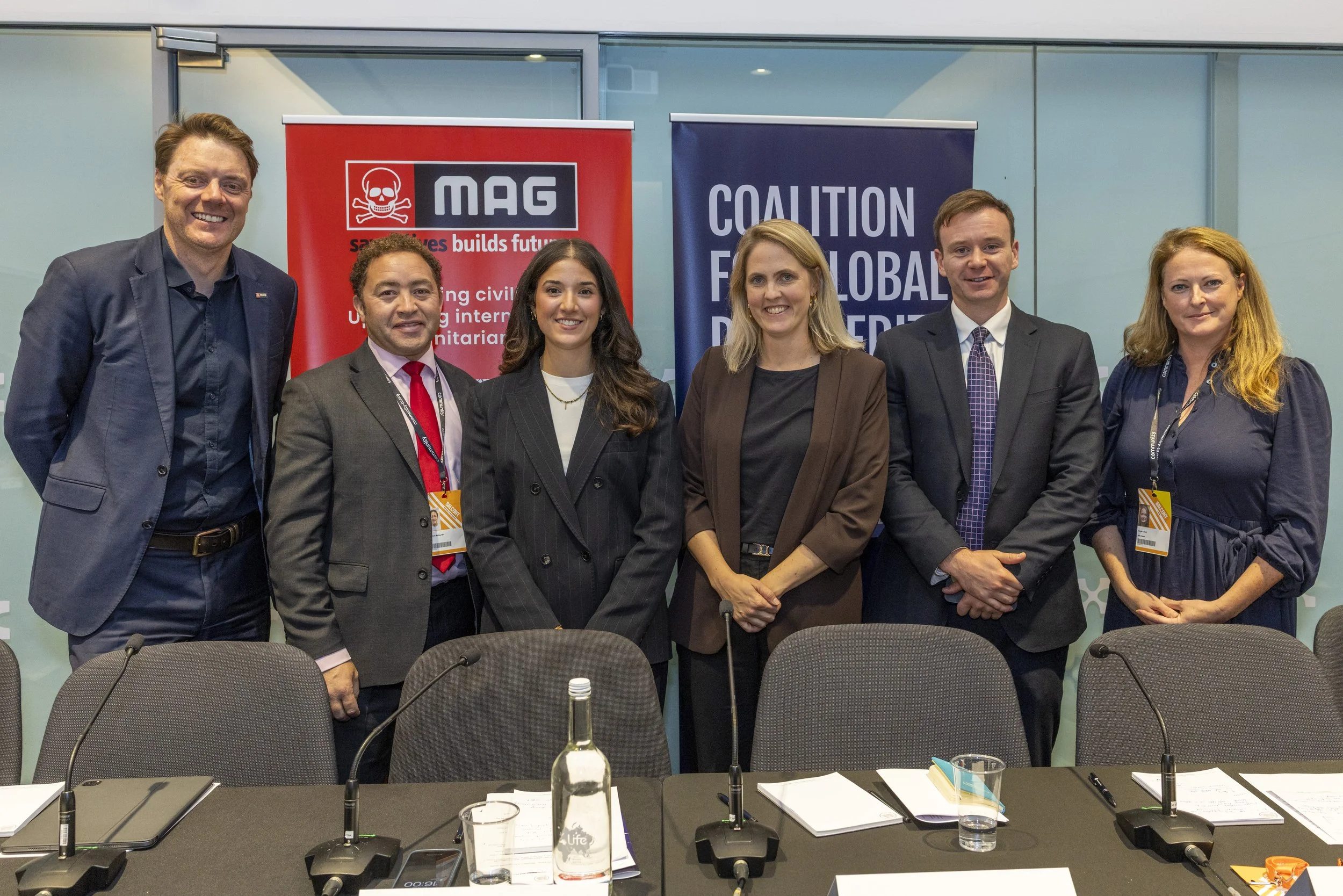
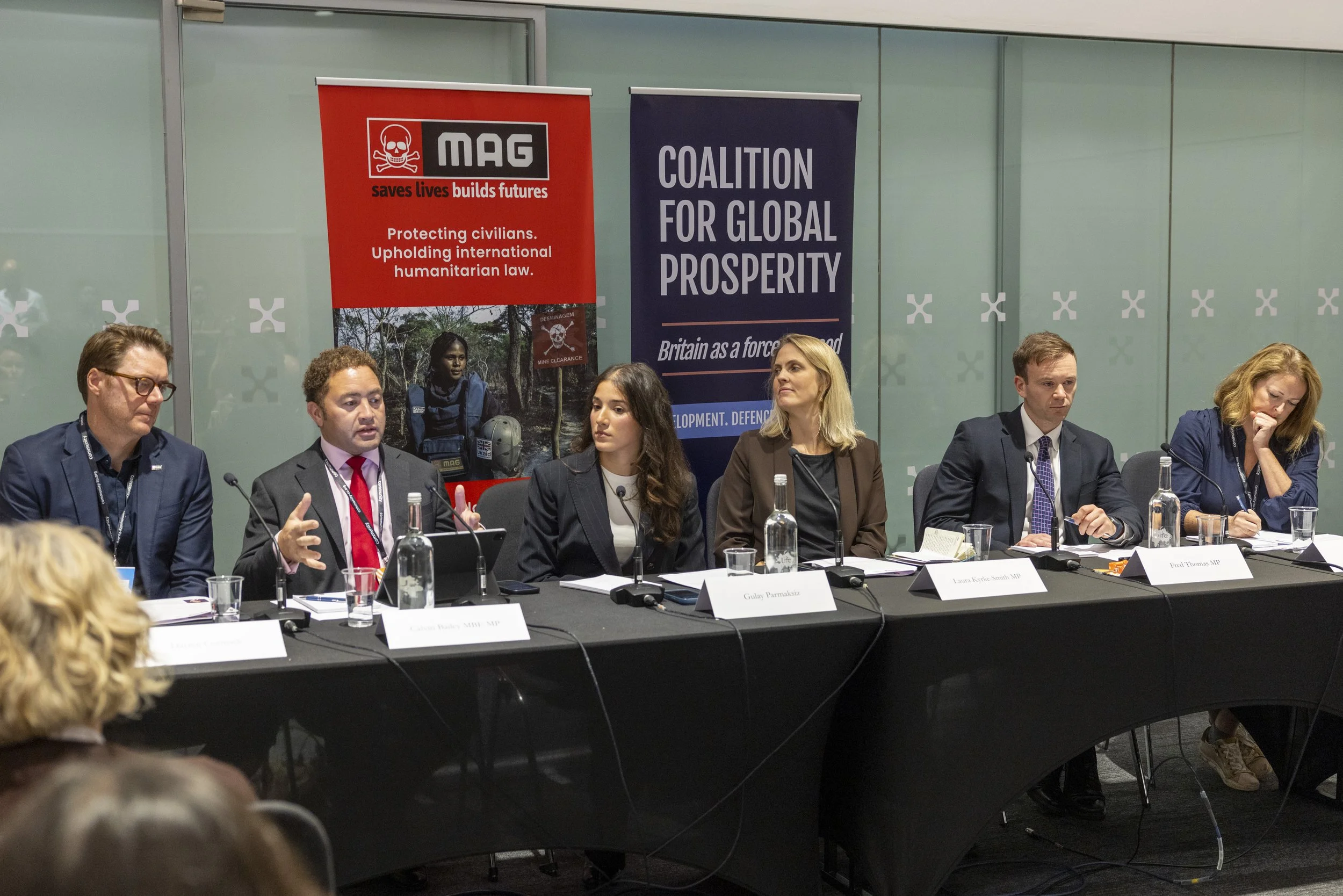
Discussions opened with a clear recognition of development as an integral tool for international security, highlighting practical applications of technology in conflict prevention and the vital role of mine action in driving regional community stability. Panellists warned of the heightened vulnerability to conflict when communities lack access to impartial news, positioning trust outlets like the BBC World Service as key defence against hostile disinformation. The panel discussed the five securities framework - climate, security, health, food and economics - to demonstrate the multi-faceted nature of ODA, and how compounding threats undermine the UK’s values. Closing statements urged the UK to maintain a convening role on the world stage.
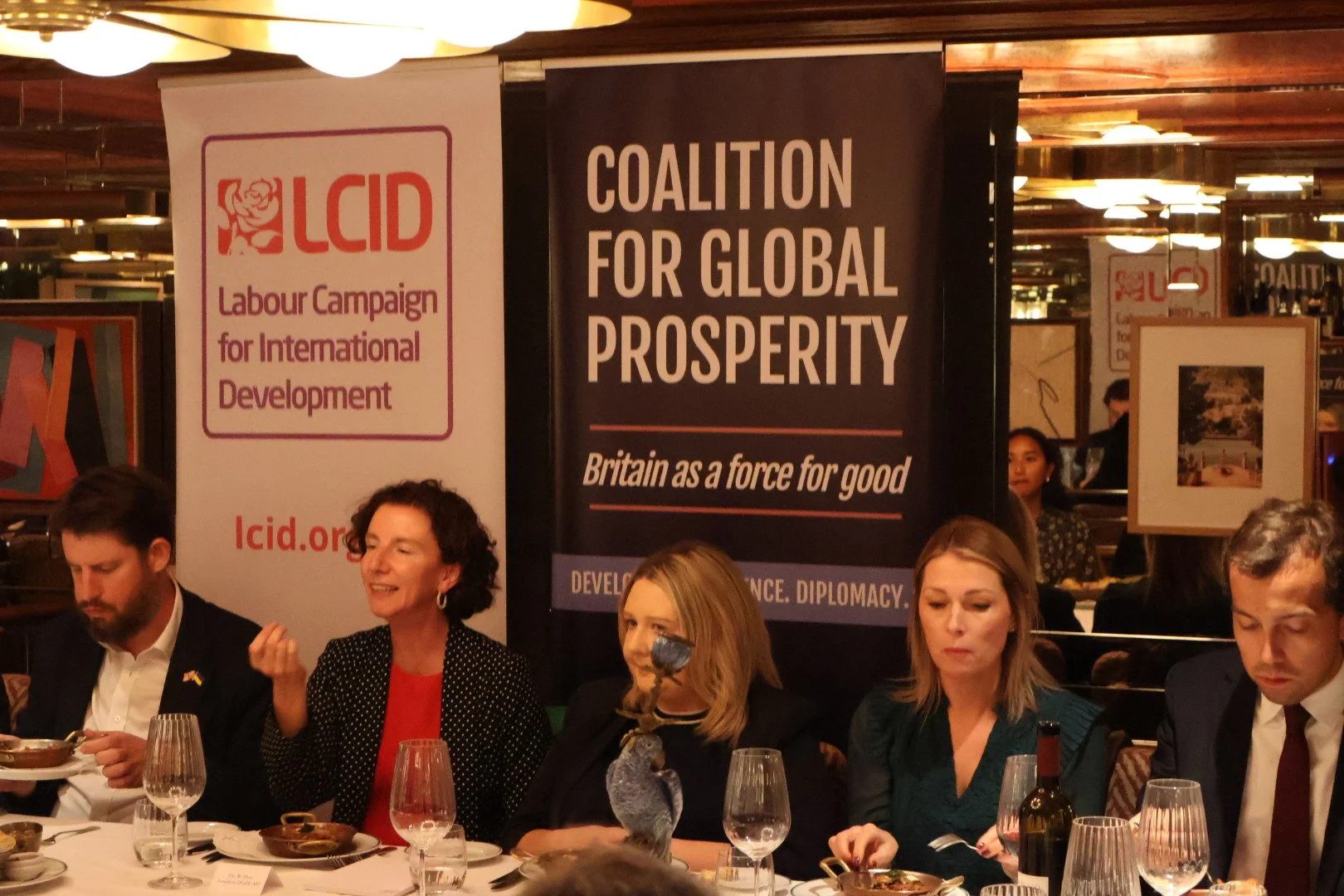
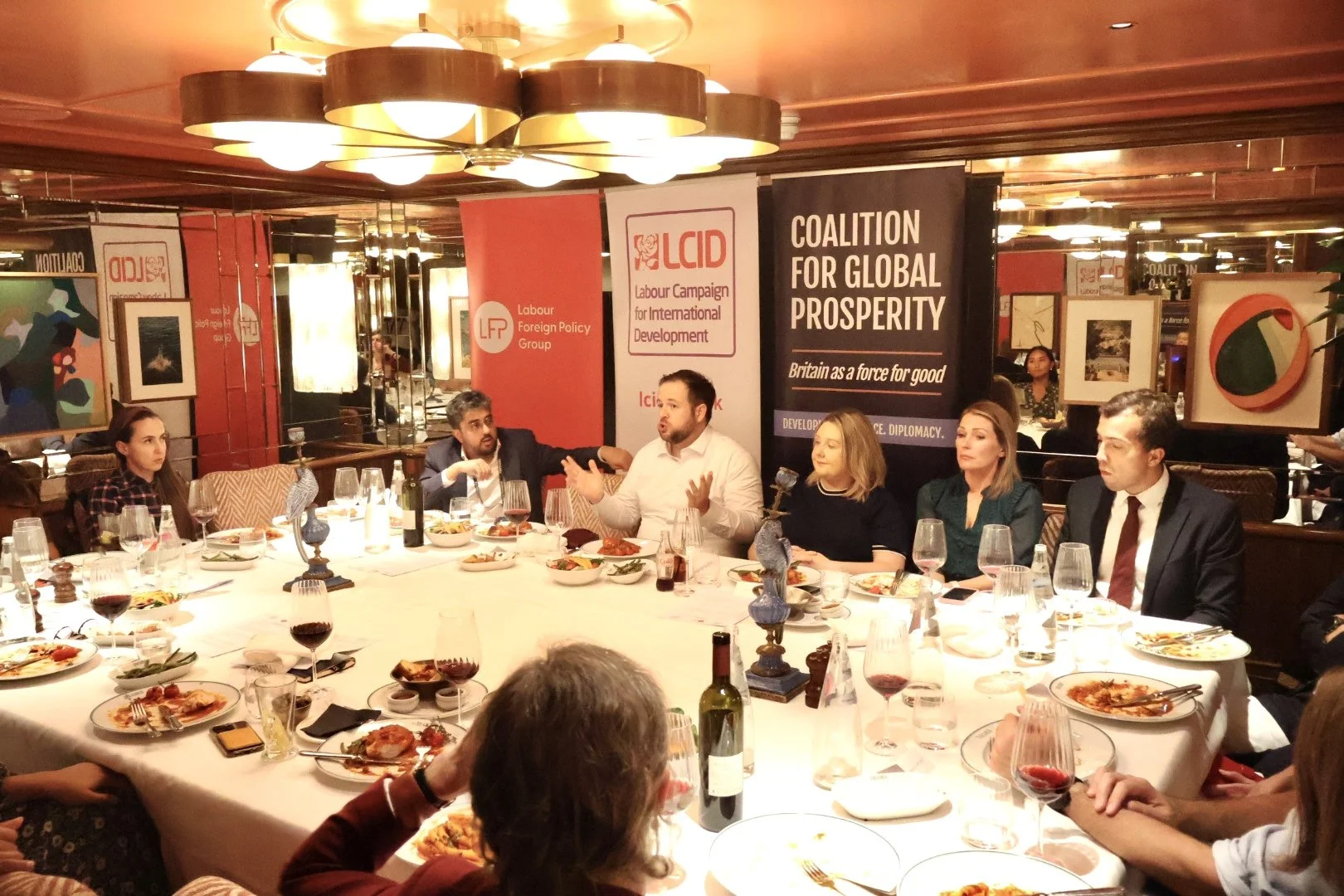
CGP’s private dinner, ‘Aid, Influence, Impact: Making Development Work for Today’s World’, was co-hosted by the Labour Foreign Policy Group and Labour Campaign for International Development. Speakers Stephen Doughty MP, Minister of State for the Middle East, North Africa, Afghanistan and Pakistan, H.E. Ms. Macenje Mazoka, High Commissioner of Zambia to the UK and The Rt Hon Anneliese Dodds MP, MP for Oxford East, led discussions to explore the UK’s international role, diplomatic influence and the links between development, security and global stability. Additional guests included Major General (Retd) Rob Thomson CBE DSO, Noah Law MP, David Taylor MP, Jess Toale MP, Dr Beccy Cooper MP and other sector colleagues.
Attendees explored how the UK can best build resilience in a fragmented world, with focus on the UK’s need to leverage its historic relationships and diplomatic influence across the Middle East. The conversation turned to broad considerations of regional stability, addressing migration pressures through both a humanitarian and regional stability lens. The dinner closed with reflections on the humanitarian and geopolitical challenges in Sudan, including reference to CGP’s most recent delegation to Egypt which is the largest host country for Sudanese refugees.
Conservative Party Conference
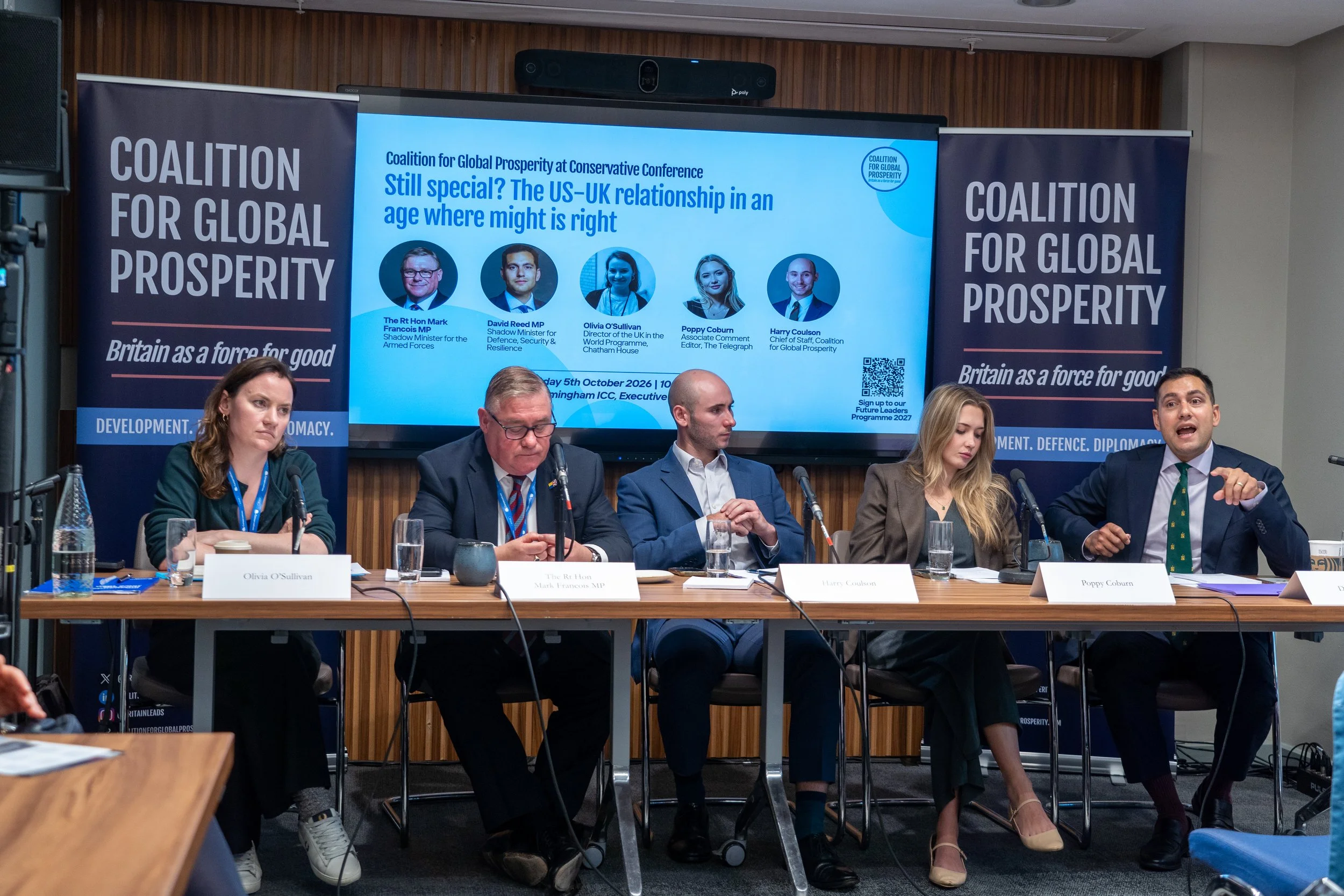
CGP hosted an expansive schedule of events across the 2026 Conservative Party Conference. On Monday 5th October, CGP kicked off the events programme with ‘Still Special? The US-UK relationship in an age where might is right’, where The Rt Hon Mark Francois MP, Shadow Minister for the Armed Forces, David Reed MP, Shadow Minister for Defence, Security and Resilience, Olivia O’Sullivan, Director of the UK in the World Programme at Chatham House, and Poppy Coburn, Associate Comment Editor at The Telegraph, examined the current state of Anglo-American relations. Mark Francois MP emphasised the importance of maintaining the US-UK relationship across presidential tenures. The panel agreed that the appetite for the UK and Europe to accept more responsibility for defence exists on both the right and left of American politics, and analysed the importance of shifting Britain’s engagement towards a strategy based around mutual self-interest.
This was followed by a packed room for our ‘In Conversation with The Rt Hon Sir Iain Duncan Smith MP’. During this session, The Rt Hon Sir Iain Duncan Smith MP, MP for Chingford and Woodford Green, shared his reflections on rebuilding trust in the Conservative party, and the lessons learned from setting up the Centre for Social Justice and Inter-Parliamentary Alliance on China. Sir Iain also shared his thoughts on the current conflicts in Ukraine and the Middle East, surmising that the UK must do more to counter the threat of totalitarian states worldwide. The session ended with a powerful defence of Britain’s role in shaping the world to date, and a defence of Britain’s contributions to global legal systems, upholding human rights, and tackling modern slavery.
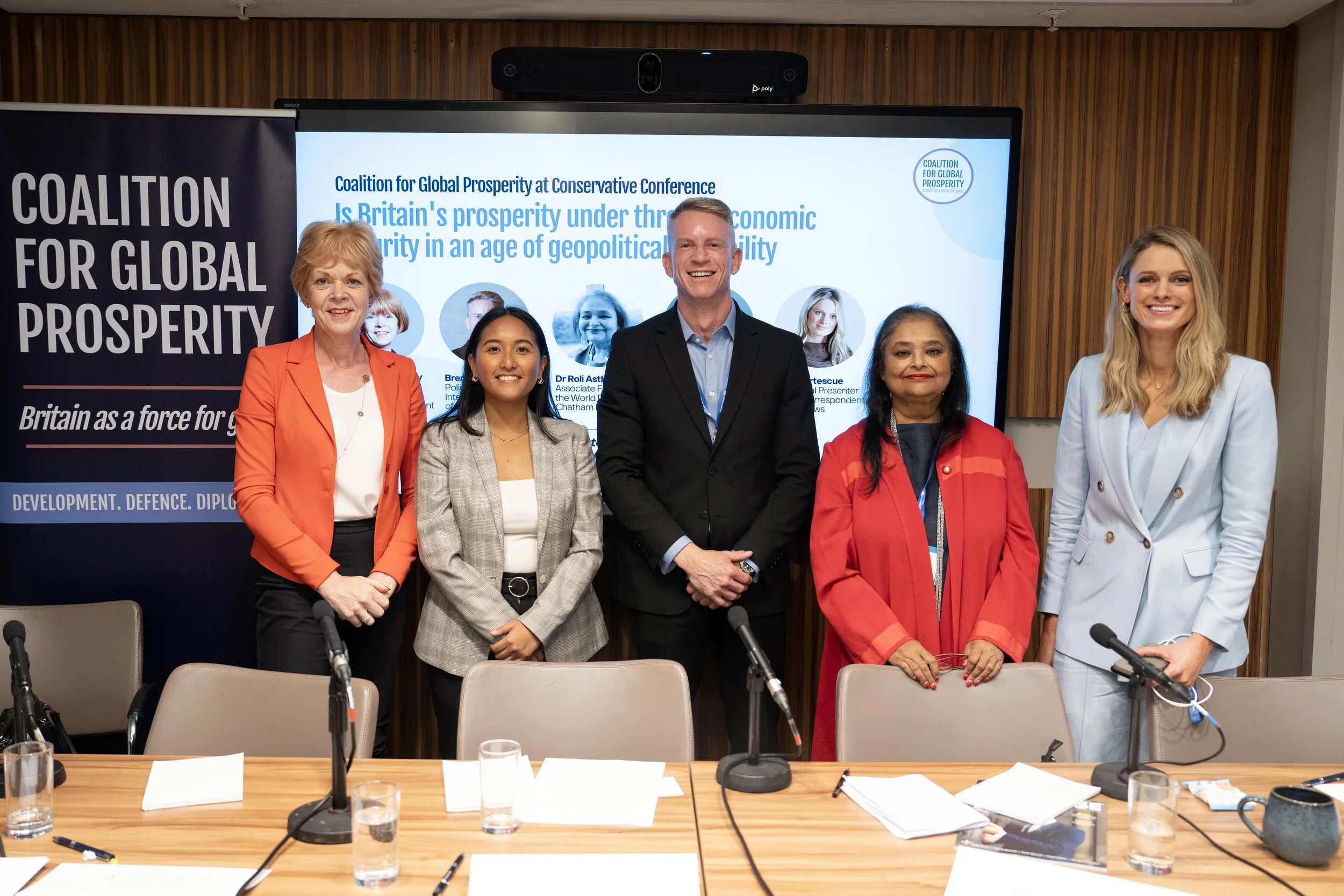
Next, CGP hosted a session titled ‘Is Britain's prosperity under threat? Economic security in an age of geopolitical instability’ where we were joined by The Rt Hon Wendy Morton MP, Shadow Minister of State for Development and Foreign Affairs, Ali Fortescue, Political Presenter and Correspondent at Sky News, Brendan Vickers, Policy Director at the International Chambers of Commerce UK, and Dr Roli Asthana, Associate Fellow, UK in the World Programme at Chatham House.
The panellists recognised that Britain is an outward facing country and that the government must understand its critical dependencies to defend from multiplying geopolitical economic shocks. Dr Asthana stated that if economic efficiency is not underpinned by a focus on economic resilience, it will begin to constitute fragility. The Rt Hon Wendy Morton MP examined how global factors are impacting constituents, with national and economic security trickling down to affect personal and family security. All panellists agreed that for the UK economy to succeed on the global stage, economic resilience must be at the heart of decision making.
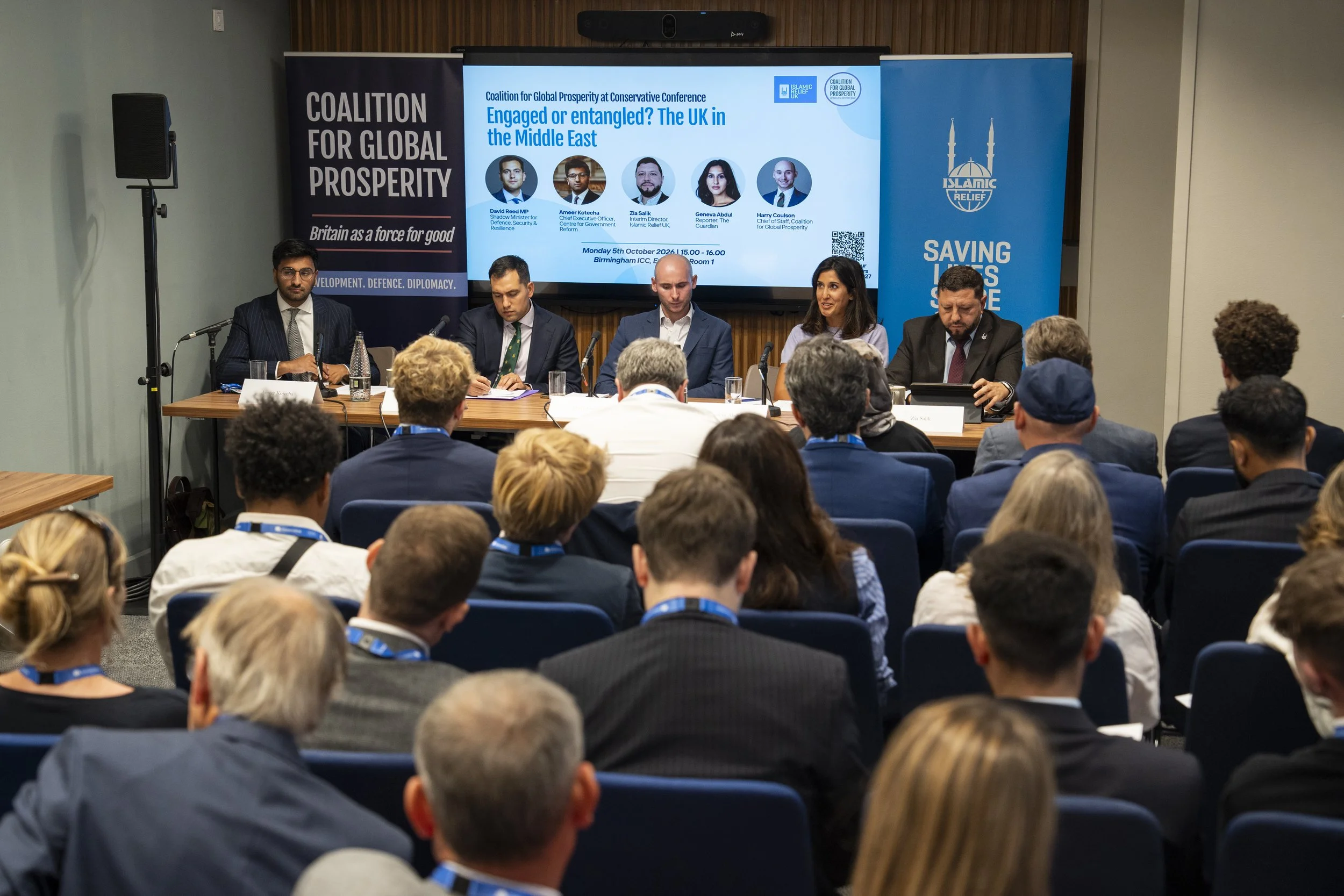
Rounding out Monday’s panels, ‘Engaged or entangled? The UK in the Middle East’ (in partnership with Islamic Relief UK) hosted David Reed MP, Ameer Kotecha, Chief Executive at the Centre for Government Reform, Zia Salik, Interim Director at Islamic Relief UK, and Geneva Abdul, Reporter at The Guardian, for an analysis of the UK’s role in the Middle East in an age of conflict and worsening humanitarian crises. Zia Salik shared updates from Islamic Relief programmes across the Middle East, while David Reed MP reflected on the importance of UK leadership and the role that hard and soft power play in protecting British security at home and abroad. Ameer Kotecha shared lessons from his time at the FCDO and evaluated how the UK’s long term engagement with Gulf allies has shifted over time. Panellists also reflected on contemporary crises in the Middle East, and the role that Britain can play in safeguarding human rights and bringing conflicts to a stable resolution.
On Monday evening, CGP hosted a private dinner, featuring keynote speaker The Rt Hon Sir James Cleverly MP, MP for Braintree. ‘Strength and statecraft in a contested world’, brought together James Cleverly and The Rt Hon Mark Francois MP with alumni of CGP’s Future Leaders Programme.
Throughout the evening, discussions focused on maintaining UK prosperity and how defence, diplomacy, and development can unite to strengthen Britain's global leadership. As the international order Britain has long relied on comes under growing strain, the dinner provided a timely opportunity to discuss how the UK can protect its interests and lead on the world stage.
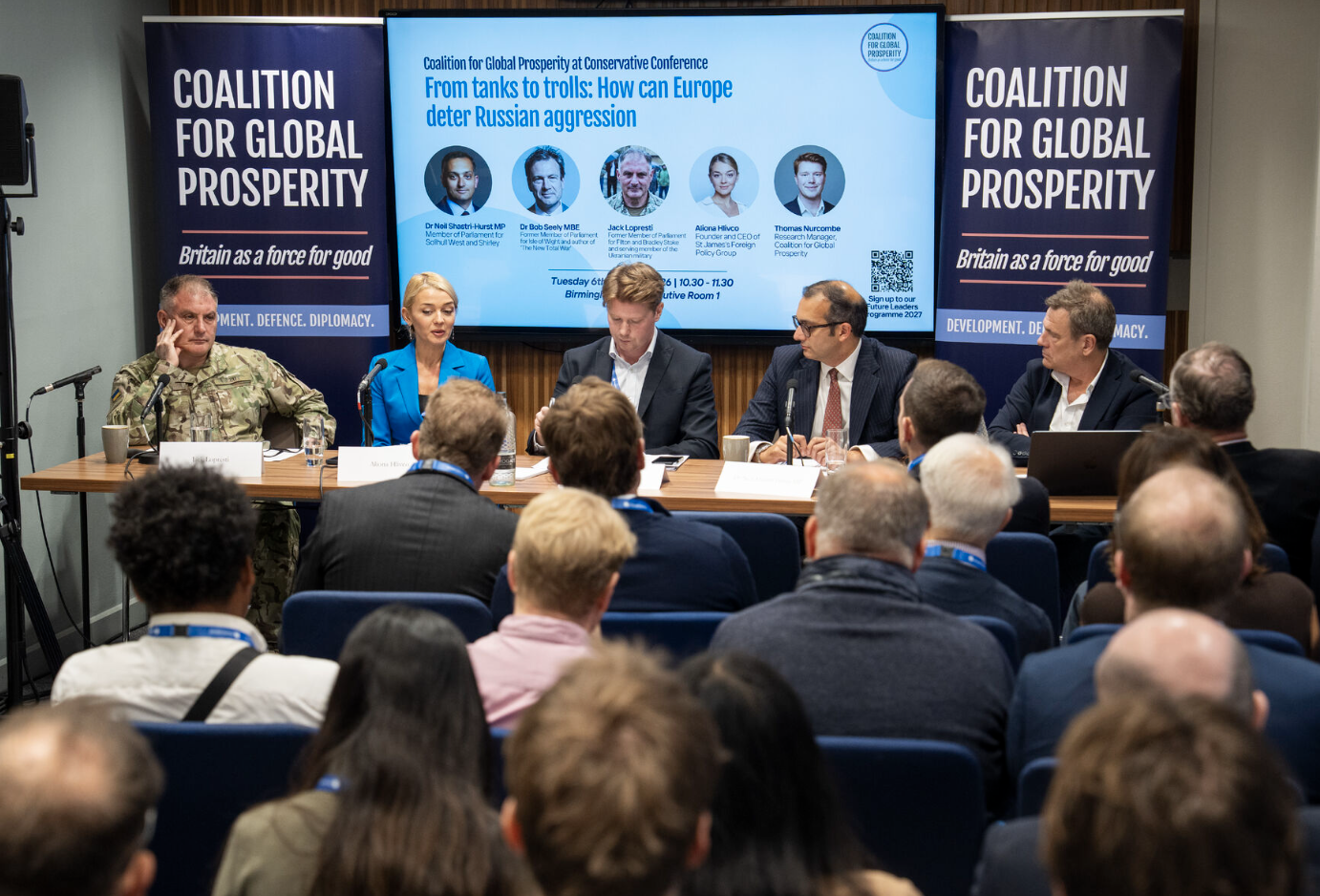
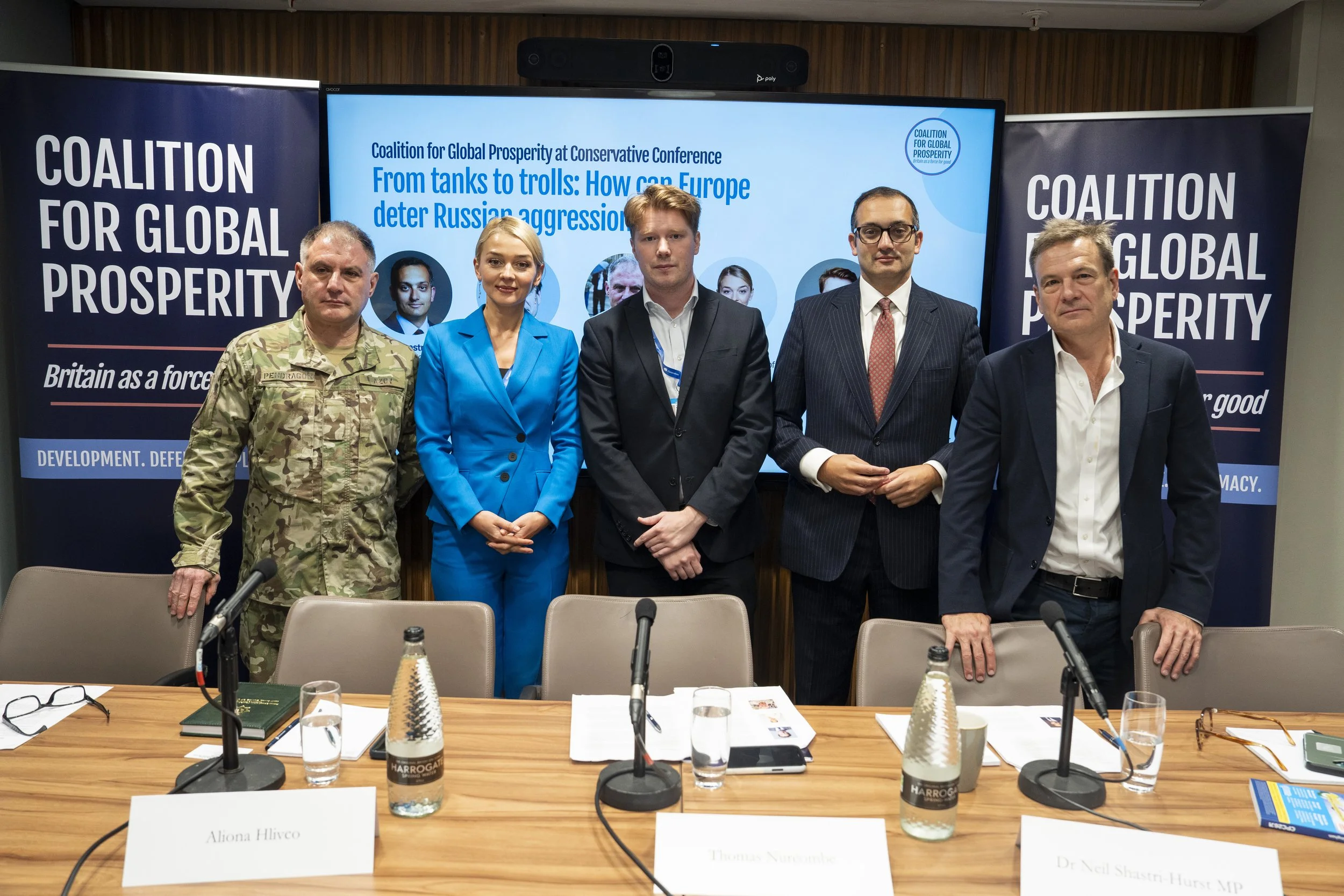
On Tuesday 6th October the events continued with ‘From Tanks to Trolls: How can Europe Deter Russian Aggression’ with Dr Neil Shastri-Hurst MP, Shadow Parliamentary Under Secretary for Health and Social Care, Dr Robert Seely MBE, former MP for the Isle of Wight, Jack Lopresti, former MP for Filton and Bradley Stoke and serving member of the Ukrainian military, and Aliona Hlivco, Founder and CEO of St. James's Foreign Policy Group, joining the panel to share updates from the frontlines. Panellists discussed the latest developments in Ukraine, including the emergence of jet-powered drones in recent months and the ongoing threat of information warfare. The discussion explored the UK’s role in the development and procurement of defence technology, and the wider geopolitical scope of the conflict. All panellists agreed that the Government must learn lessons from Ukraine to protect the UK from the intensification of sub-threshold hybrid warfare and address the gaps in the UK’s national resilience.
Following this, CGP were proud to host 'In Conversation with The Rt Hon Dame Priti Patel DBE MP’. During this session Dame Priti Patel reflected on her time in Government as Home Secretary and Foreign Secretary, and offered her thoughts on how the Conservative Party can rebuild trust with the public. The wide ranging discussion also touched on her new role as International Secretary of the Conservative Party, and how building relationships with centre-right parties can shape the party’s recovery. Dame Priti also recognised the essential role of maintaining bilateral relationships with the UK’s allies to preserve and enhance the nation’s economy, security, and prosperity.
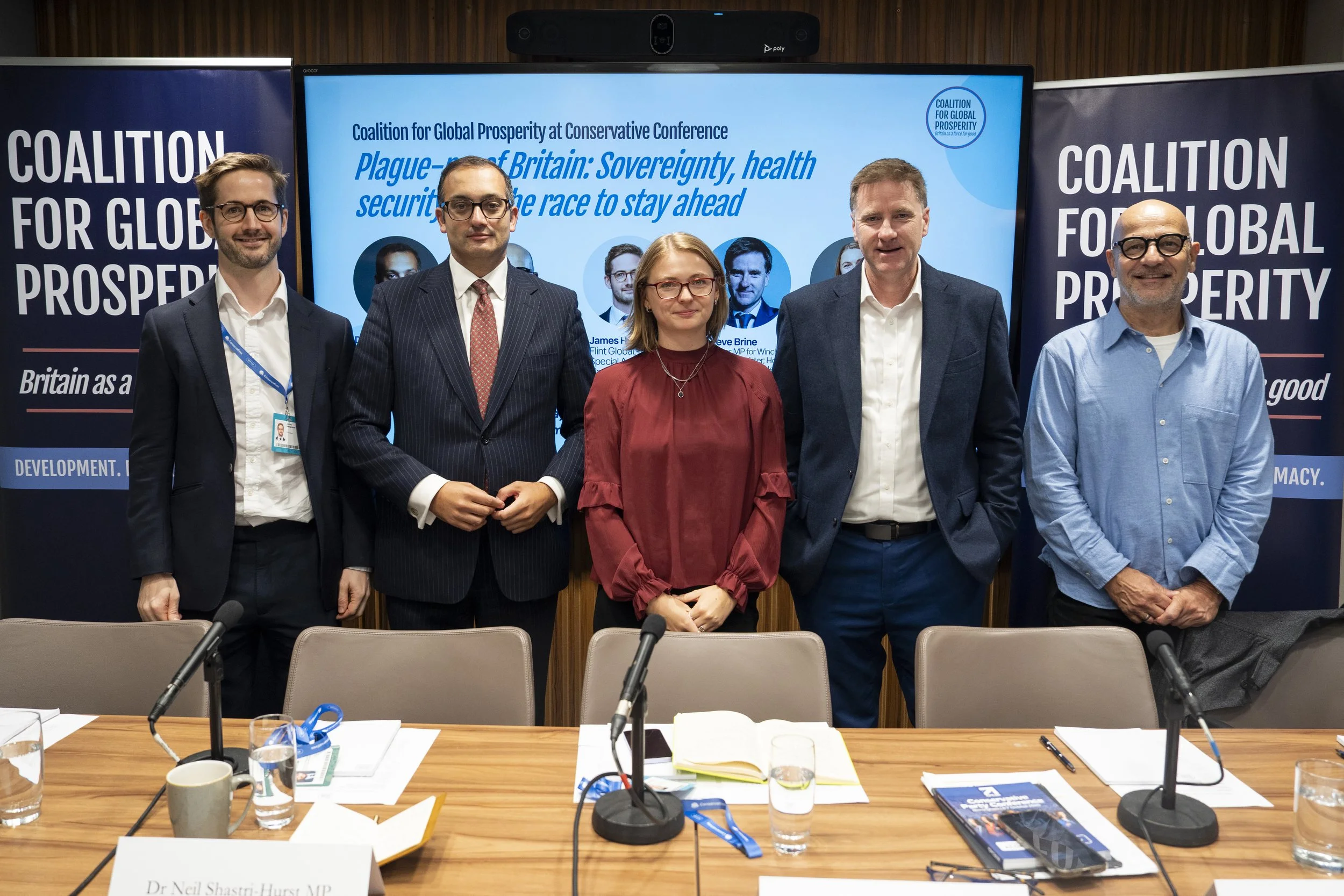
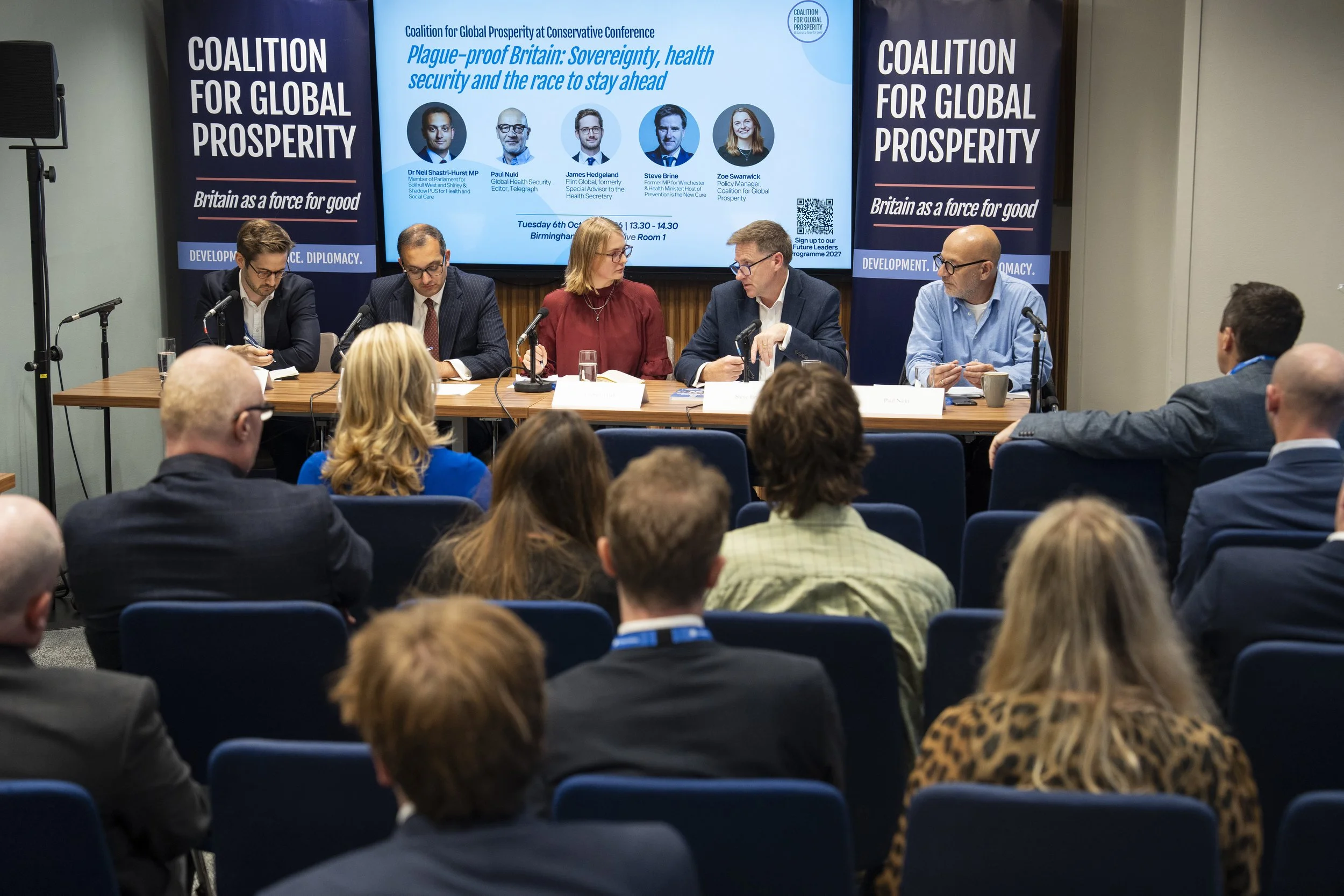
Next, CGP welcomed Dr Neil Shastri-Hurst MP, Paul Nuki, Global Health Security Editor at The Telegraph, James Hedgeland, formerly Special Adviser to the Health Secretary, and Steve Brine, former MP for Winchester and PUS for Public Health and Prevention, for a discussion on ‘Plague-proof Britain: sovereignty, health security and the race to stay ahead’. Steve Brine discussed his time in Government during the Covid-19 pandemic, reflecting on how the UK can learn from the crisis and better prepare for the next global health threat. The panellists discussed the role of the media in supporting pandemic response, as well as identifying emerging global health risks. Dr Neil Shastri-Hurst MP explained the importance of bolstering and exporting the UK’s health and life sciences research expertise, and pointed to the role of this industry in projecting British soft power across the globe. There was consensus that in an age of global instability, the UK must do more to improve our national resilience to future pandemics, while using British expertise to identify threats before they spread.
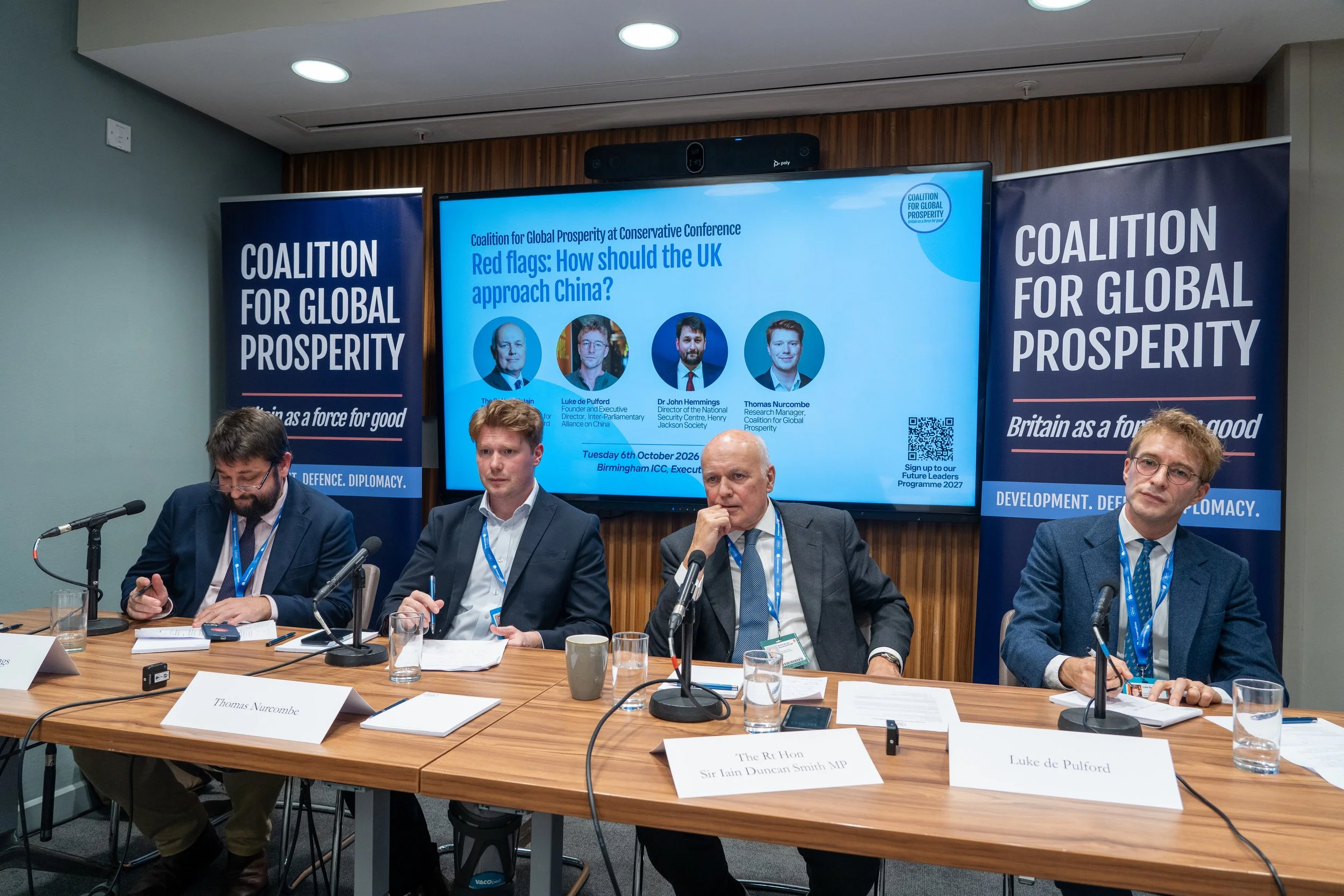
Finally, CGP closed out this year’s conference with ‘Red Flags: How Should the UK Approach China?’ where we were joined by The Rt Hon Sir Iain Duncan Smith MP, Luke de Pulford, Founder and Executive Director of the Inter-Parliamentary Alliance on China, and Dr John Hemmings, Director of the National Security Centre at the Henry Jackson Society, to discuss the intricacies of the UK’s relationship with China. The panel explored China’s modern relationship with the UK, and how the UK should protect its interests at home and abroad from Chinese influence. Sir Iain spoke strongly about the threat of China to international freedom and reflected upon the sanctions placed upon him by the Chinese state. Dr John Hemmings spoke about the impact of shocks in China’s economy on Britain's prosperity, and the risks that overreliance can pose for national security. Luke de Pulford shared insights on the UK’s diplomatic approach to China, and the need to go further to protect human rights and push back against political repression. Overall, the panel provided an excellent opportunity to analyse the China strategy of successive UK Governments, and take stock of the challenges that Britain will face in the coming decades.