Beyond the Border: Report Launch
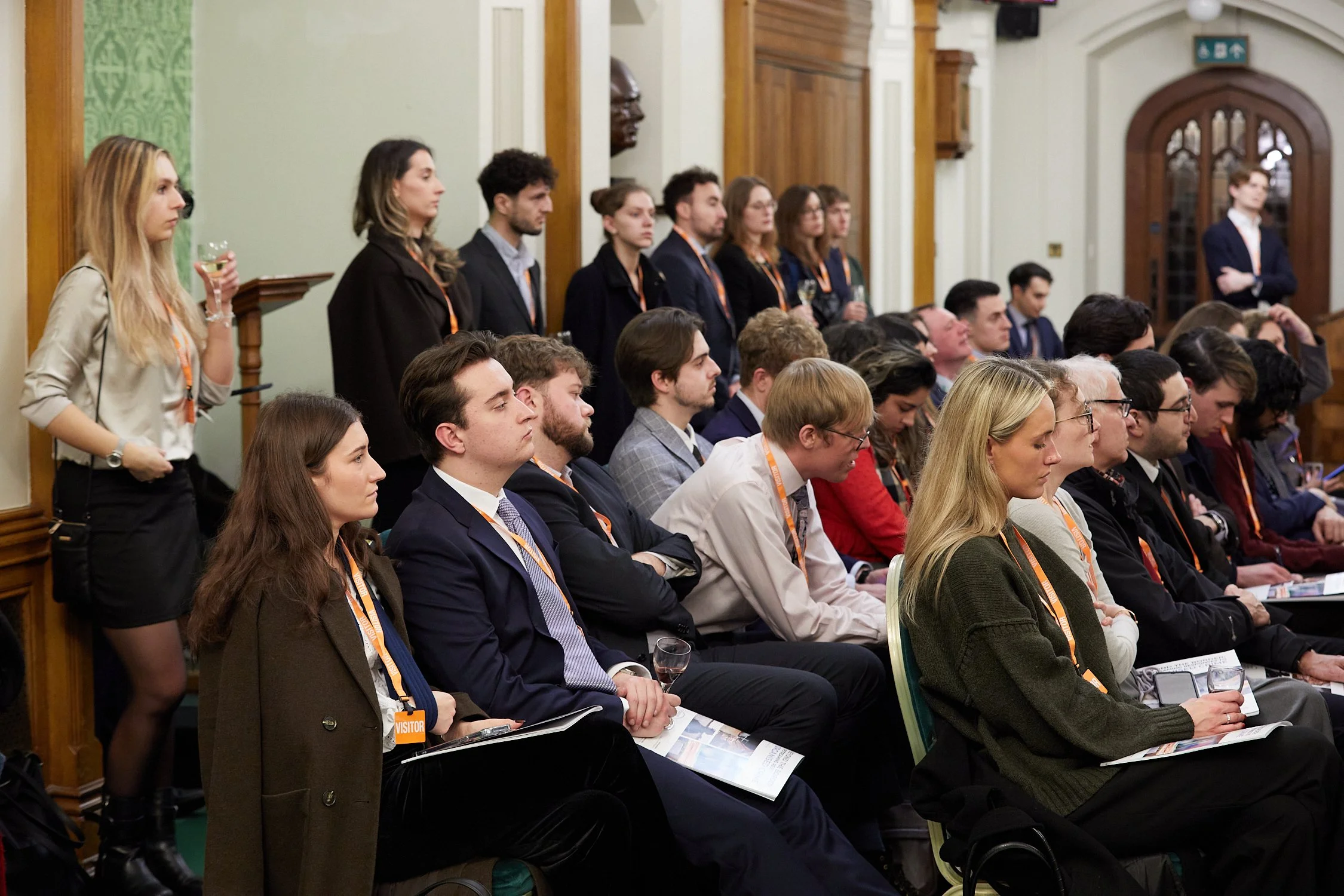
On Monday 23rd February, CGP launched our new research report, ‘Beyond the Border: Upstreaming Responses to Serious Organised Crime Threats’, highlighting the challenges facing Britain from serious and organised crime and the ways that we can tackle it.
We launched the event in Parliament, kindly sponsored by the foreword author, Richard Baker MP for Glenrothes and Mid Fife. Richard opened the event by contextualising the changing threat from organised crime: illicit financial flows, cybercrime and drug supplies defy traditional understandings of border control, and criminal groups are embracing new technologies in a way that we are struggling to keep up with.
The panel was chaired by CGP Senior Researcher, Zoe Swanwick, and brought together experts across the field: Patrick Stevens, Rule of Law Director at International Justice Development and member of the UK Soft Power Council, Bob Savic, Head of Cross-border investigations and Geopolitical Advisory at Global Policy Institute, and Jakob Kopperud, Director of Government and Multilateral Relations at the World Bank.
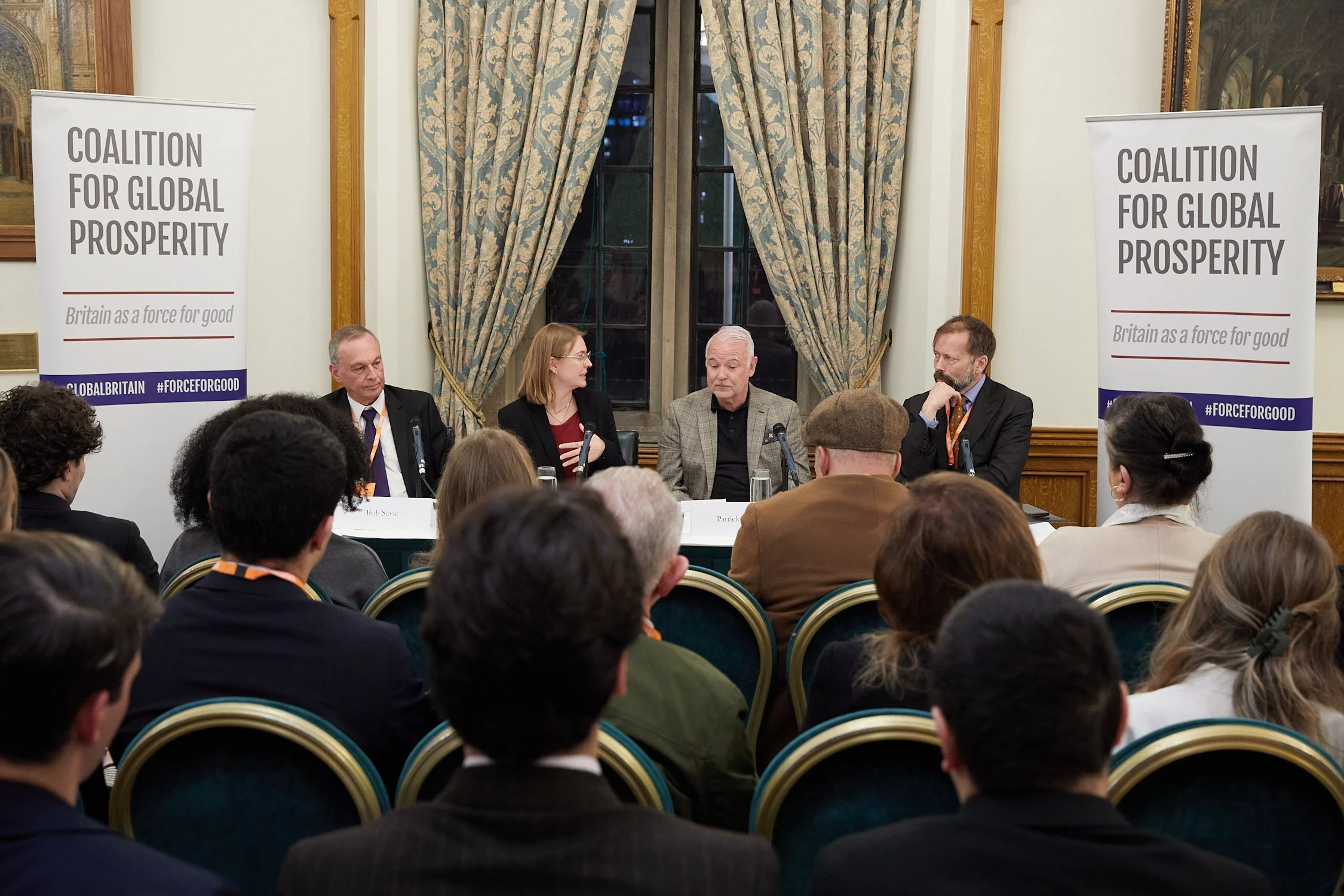
From left to right: Bob Savic, Zoe Swanwick, Patrick Stevens, Jakob Kopperud.
To open the panel, Bob Savic argued that one of the main challenges emerging from organised crime is the diversification of their income and its impact on increasing cartel violence. For instance, there is a major shift in South America today where organised crime groups are moving beyond the drugs trade and into illicit mining in the Amazon Basin, often using child labour. This shift has been the driving force behind record levels of violence in countries such as Ecuador. This is also a challenge in South Africa, which Bob noted was of particular relevance to the UK: precious metals is one of the main imports to the UK, which means that illicit activity is exposing us to serious and organised crime.
The conversation also highlighted that Russia is behind a lot of global criminality that either through hacker networks, or crime groups, are directly linked to Russia’s military and intelligence organisations.
Despite the Government’s efforts to close loopholes in the financial systems, London remains a key transit hub for cartel money laundering, which Russia is actively exploiting to circumvent sanctions. Cartels know how to use holding companies to launder money, with London being used as a route into European markets. Beyond the UK, Bob highlighted Russian activity across Africa particularly in illicit mining, some of which has been funding the war in Ukraine.
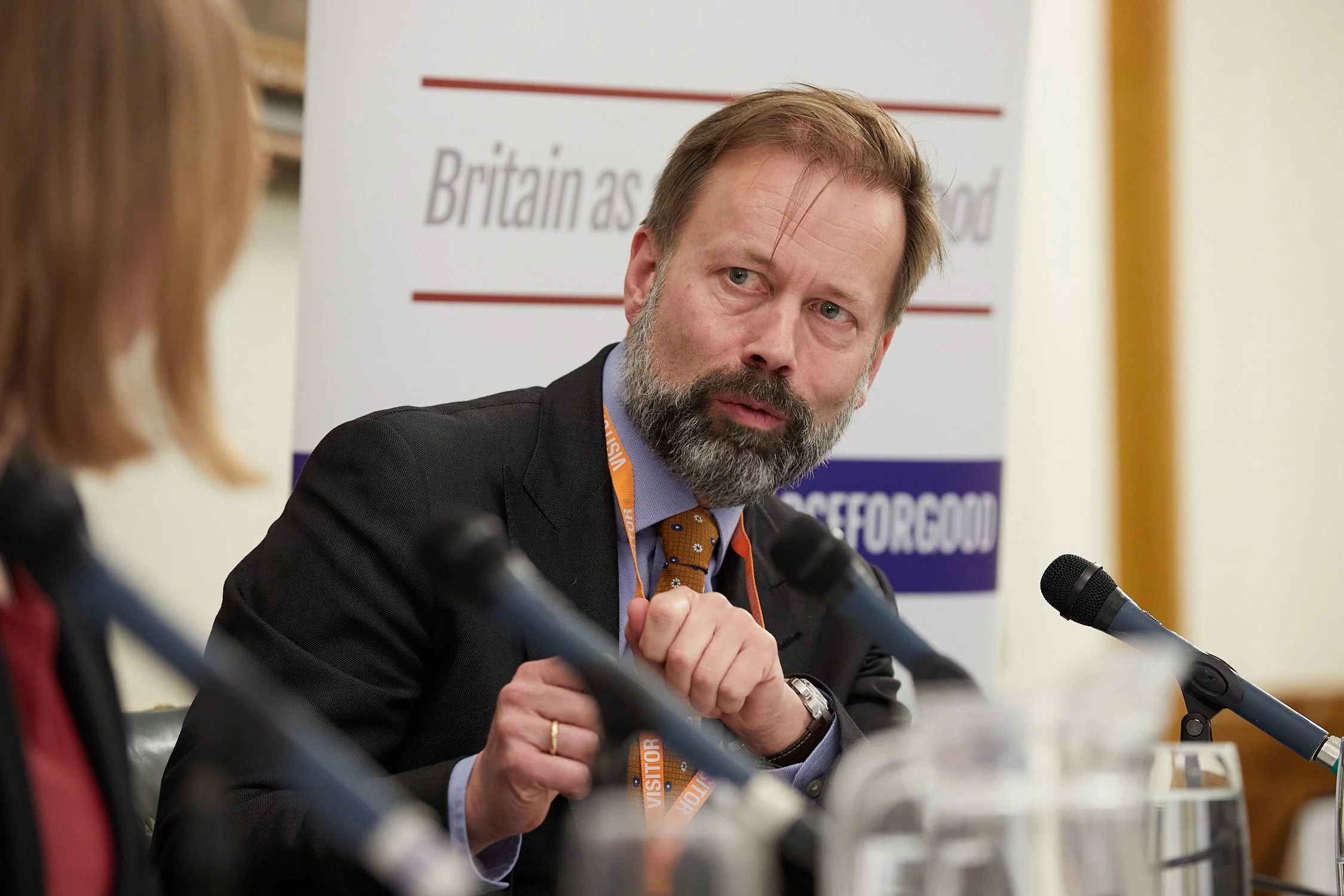
Indeed, the threat to those living in the Global South remained a thread throughout the discussion. From the World Bank’s perspective, Jakob pointed to another concern for developing countries which are seeing the highest levels of population growth. Given the upward trajectory of serious and organised crime across developing countries, this has important consequences. For instance, with around 1.2 billion young people entering the workforce, against 400 million expected jobs, this creates fertile recruitment ground for criminal groups, and potential victims.
At the same time, Patrick emphasised to the room that the erosion of the rule of law globally is undermining political will, though international cooperation remains fundamental in spite of rising hostilities. Further, with global collaboration breaking down, he noted that it will be harder to tackle some of the driving factors behind serious and organised crime, such as tackling climate change which is a driver of human trafficking. Ultimately, the erosion of the functioning of governance globally is one of the biggest hindrances to upstreaming efforts.
But the panellists were also keen to point to some solutions. Jakob highlighted an ongoing initiative at the World Bank which is pooling data from a range of data from governments, OSINT-collected data and other institutions. The collection would use tools such as AI to help identify risks of fragility earlier, for a more preventative approach.
All panellists noted the untapped potential of the private sector. Despite reluctance within some quarters of the public sector, Patrick argued that private companies have assets and capabilities that would allow governments to go much further; they already are. Ultimately, the panelists agreed that better public-private partnerships relies on better regulatory environments and more effective political systems
Overall, drawing together perspectives from multilateral organisations, international law, and the private sector, the panel converged on one key message: we can no longer carry on as we have been.
Authored by Senior Researcher, Zoe Swanwick, and featuring a foreword from Member of Parliament for Glenrothes and Mid Fife, Richard Baker MP, “Beyond the Border” argues that in an era of great power competition, rapid technological change, and increasingly porous borders, it is becoming increasingly difficult to effectively counter serious and organised crime.
Click below to read the full report.