Beyond the Border:
Upstreaming Responses to Serious Organised Crime Threats
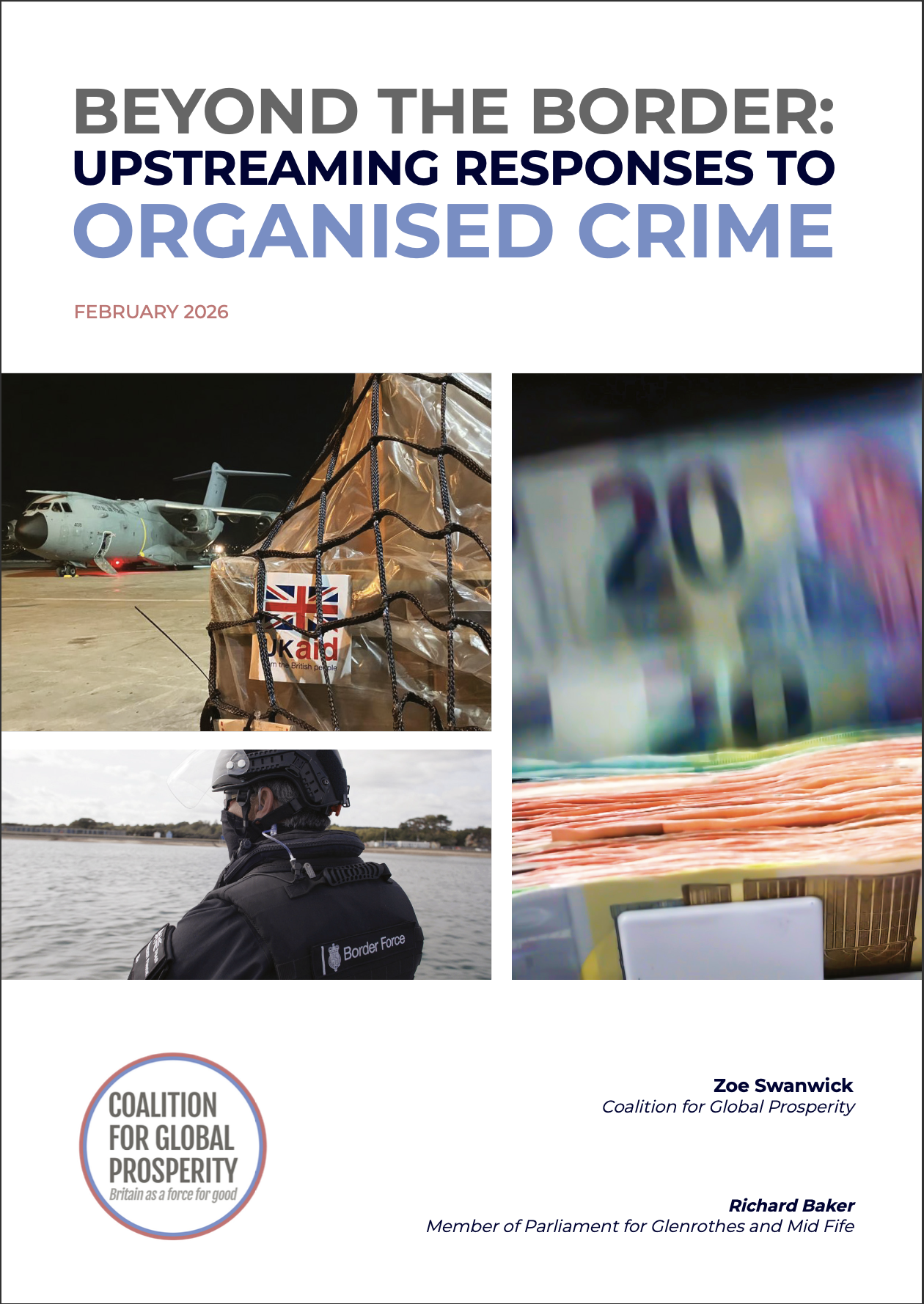
A timely new report from the Coalition for Global Prosperity, authored by Senior Researcher Zoe Swanwick and introduced by Richard Baker, Member of Parliament for Glenrothes and Mid Fife, examines the threats facing Britain from serious and organised crime and the ways that we can tackle it.
Beyond the Border: ‘Upstreaming Responses to Serious Organised Crime Threats’ argues that in an era of great power competition, rapid technological change and increasingly porous borders, combating serious and organised crimes is more complex than ever. Criminal networks are evolving quickly, exploiting new technologies and global instability to expand their reach. These networks are being weaponised by the UK’s adversaries, including Russia, China and Iran, making the issue not only a domestic threat but something that is inherently international.
The report argues that the answer lies in upstreaming efforts, tackling the issues at their roots, and disrupting the problem before it reaches the towns and cities of the UK.
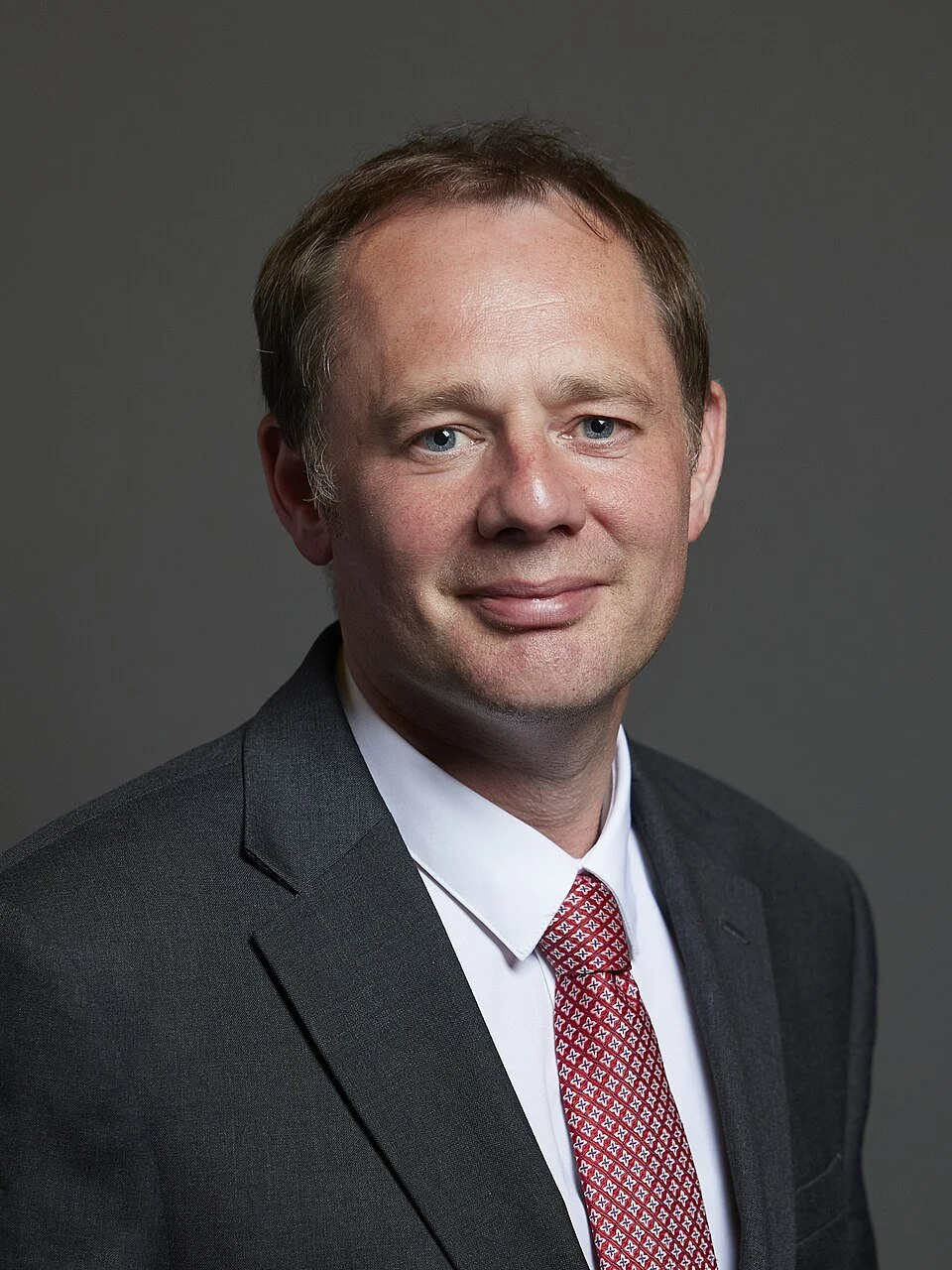
Richard Baker ©House of Commons/Laurie Noble
“Geopolitics are creating new fault lines within every aspect of security, including serious and organised crime, and criminal gangs are harnessing new technologies to globalise, expand their activities, and hide from the law. Security policy must therefore operate upstream, internationally and in partnership.”
Richard Baker MP for Glenrothes and Mid Fife, in his foreword
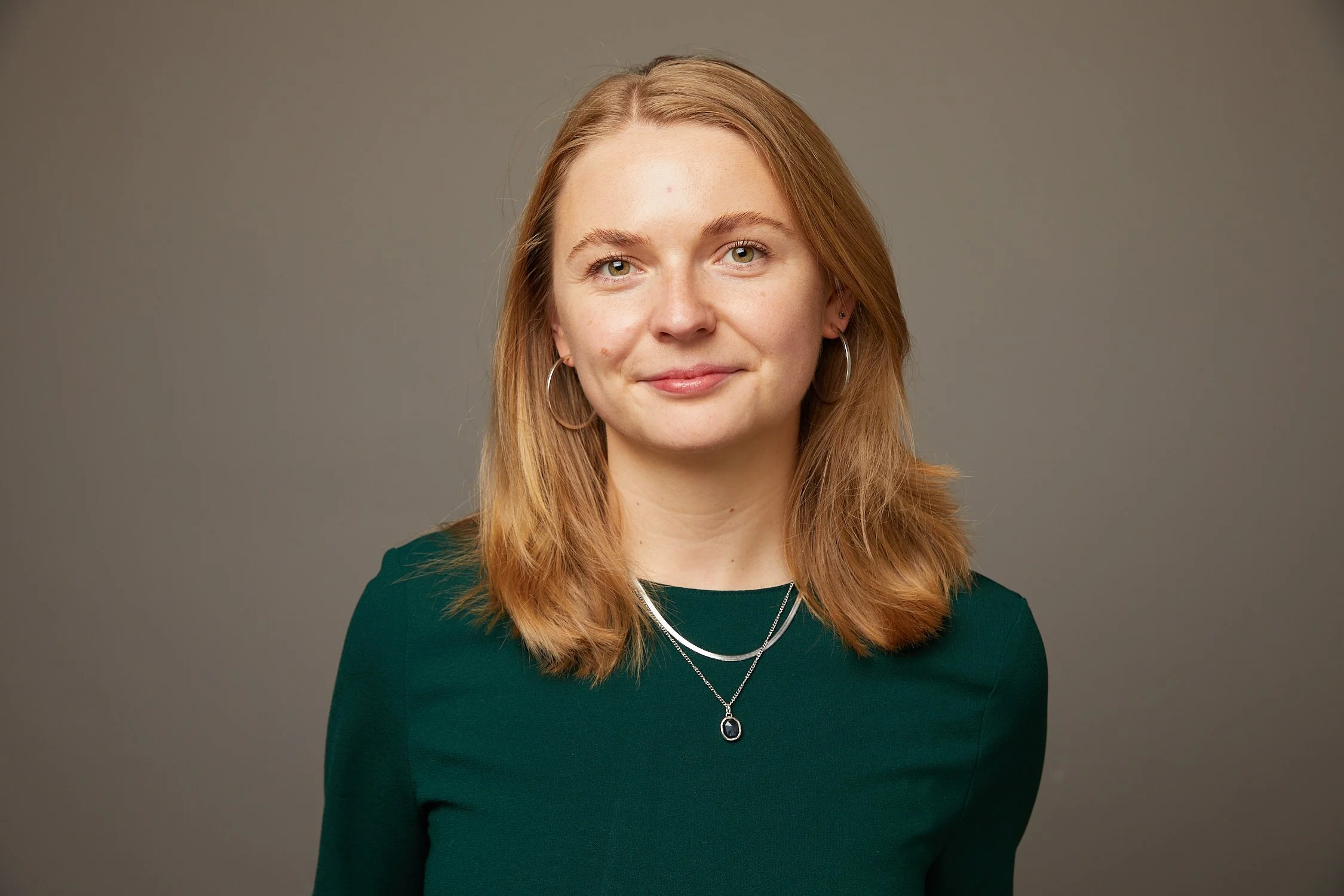
“The UK is winning tactical battles while losing the strategic war. Despite the NCA's remarkable efforts, including over 6,989 disruptions last year alone, organised crime costs have nearly doubled in a decade and criminal networks are growing. The problem is not a lack of capability: the UK has world-class intelligence, a global diplomatic network, and development programmes that can do so much. The problem is coherence. These assets operate in silos, reacting to threats or simply existing as legacy projects, rather than shaping the environment in which organised crime operates. That must change.”
Zoe Swanwick, Senior Researcher at the Coalition for Global Prosperity
Report Findings:
The UK is winning many battles, yet losing the war on organised crime: Organised crime costs the UK £47 billion a year - 54 times the NCA's annual budget. The National Crime Agency has increased its activities significantly since its establishment, with a focus on disrupting networks and arresting individuals linked to the highest harm. High impact disruptions increased x4.5 between 2017 and 2025. Yet, the threat from organised crime has increased – there is a clear disconnect between successful tactics and poor strategy.
Russia is using drug money from UK streets to fund its war in Ukraine. The NCA’s Operation Destabilise exposed how profits from UK drug sales were laundered through a Kyrgyz bank to support the Russian war machine. In 2024, British petty criminals were paid by Russian state actors to burn a London warehouse storing aid bound for Ukraine.
Chinese criminal networks are the biggest non-British organised crime threat to the UK, active across cyber, drugs, fraud, illicit finance and modern slavery. The report warns the UK must not repeat its decade-long complacency over Russian influence.
AI and deepfake fraud have exploded, becoming a national security threat: deepfake attacks nearly doubled in the UK in 2025 (up 94%); sophisticated fraud combining deepfakes, synthetic IDs and social engineering rose 180% globally. Romance scams cost UK victims £20.5m in the first half of 2025 alone. 85% of all UK fraud is now cyber-enabled.
£100 billion in illicit cash flows through London every year, with international criminal networks using the City to launder money, evade sanctions and facilitate the trade of sanctioned commodities.
Channel crossing deaths were six times higher in 2024 than 2023, with 78 people losing their lives – driven by criminal smuggling networks that also traffic drugs and exploit victims into modern slavery.
The UK's Integrated Security Fund faces a 50% budget cut in 2026-27 – precisely as geopolitical instability is increasing criminal exploitation of fragile states. The report warns this risks dismantling the very upstream tools that have delivered results.
Report Recommendations:
Develop an Integrated UK Serious Organised Crime Strategy - mapping all UK capabilities with end-to-end criminal network visualisation, explicitly treating SOC as a national security threat.
Move the SOC Strategy Board from the Home Office to the Cabinet Office - to ensure whole-of-government ownership, on a par with counterterrorism.
Launch a 'SOC Problem Book' - a structured tool to identify capability gaps and open innovation challenges to academia and the private sector, modelled on the National Cyber Security Centre’s research approach.
Create a public-facing 'Upstream Impact Dashboard' - showing UK citizens the tangible security return on development spending, e.g. '£X million in aid prevented Y kilograms of cocaine from reaching UK streets.'
Protect the Integrated Security Fund's upstream capacity - ensuring the recently announced budget cuts of 50% and restructuring do not strip the agility that has delivered results in Albania, Ukraine and Iraq.