War of Words: Countering Russia’s Global Information Campaigns
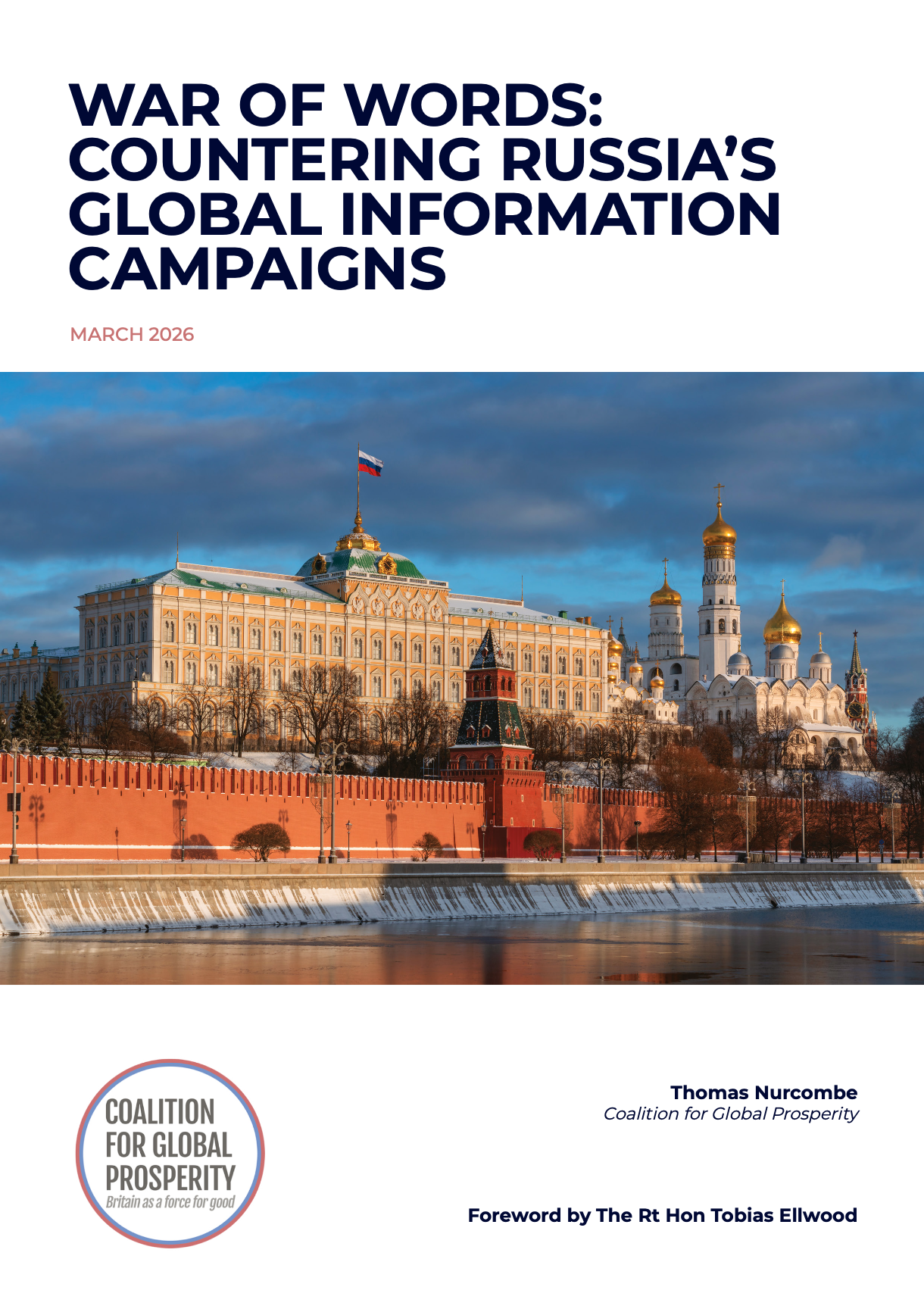
A major new report from CGP, authored by Senior Researcher Thomas Nurcombe, featuring a foreword from The Rt Hon Tobias Ellwood, explores how Russia is using information campaigns to set the foundation for future aggression in Europe.
Disinformation and propaganda have been central to Russian strategy for more than a century. Notwithstanding technological developments and shifting political dynamics, Russia’s contemporary information campaigns exhibit striking similarities to the USSR’s Cold War strategy. In 2026, these pose a direct threat to European security. They are not merely instruments of influence, but enablers of future aggression, designed to undermine the credibility and cohesion of NATO and align global opinion with Moscow’s objectives.
As the Kremlin expands the scale, aggression, and reach of its information campaigns, deterrence against Russian expansionism is steadily eroding.
This report examines the role of information in Russian strategy, the nature and methods of its disinformation and propaganda, and the vulnerabilities exploited. Assessing three case studies - Mali, Lebanon and Latvia - it demonstrates how the Kremlin is laying the groundwork for future aggression in Europe. It concludes with a series of recommendations for the UK government, designed to reduce the structural vulnerabilities that Russian information campaigns depend upon in the UK, Europe, and across the world.
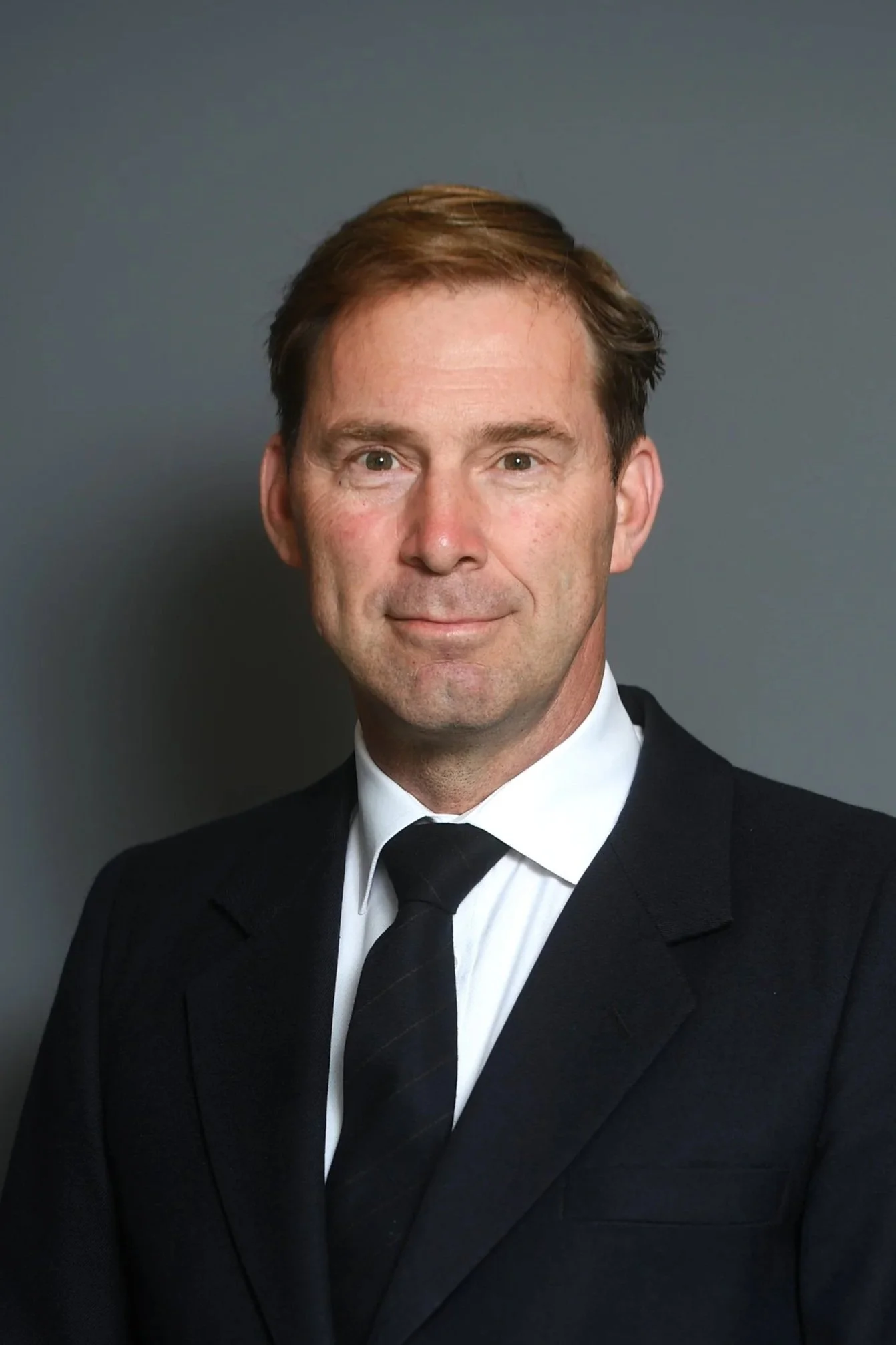
"Our adversaries do not fear Western military strength as much as they welcome our disunity. The frontline is no longer confined to distant battlefields. It runs through our newsfeeds, our institutions, and our public debate. If we fail to defend that space, deterrence weakens, and the risk of future conflict grows … This is not a peripheral challenge. It is a core national security threat.”
“The Kremlin, as the UK drags its feet, is actively laying the groundwork for a future invasion in Europe. A failure to deter it risks either Europe being pulled into a full-scale conflict or the credibility of the NATO alliance being fatally undermined, allowing Russia to walk across the continent freely. Russia’s global information campaigns are eroding deterrence by weakening trust within the alliance, dividing societies, shifting global alignments in its favour, and creating false flags. Left unchecked, warnings that Britain will find itself at war with Russia will come to pass.”

Key Findings
Preconditions for invasion - NATO division and lower costs of war: As the Kremlin expands the speed, scale, and aggression of its information campaigns, it is undermining NATO cohesion and reducing the political, economic, and military costs of future aggression.
Russia is increasing proxy news outlets across the world, including in cooperation with terrorists like Hezbollah: Across Africa, as many as 4,000 news websites disseminate content that originates from Sputnik and RT. In the Middle East, the Kremlin has built ties with Hezbollah’s media machine to spread anti-Semitic and anti-Western propaganda across the Middle East.
Growing international alignment with Russia: The Kremlin knows that there is a reduced likelihood that it will be held to account for aggression and that there will be limited economic and diplomatic consequences. In fact, there is a greater chance that more states will actively support Russia with money, material, and manpower.
Escalating risk of a false flag scenario in Latvia: A large Russian-speaking population in Latvia remains exposed to Kremlin media channels, despite the country’s bans. Russia’s messaging is becoming more aggressive and is undermining political and social stability. Russia is clearly setting the stage for a false flag operation in Latvia, mirroring its tactics from 2014 and 2022 in Ukraine.
Russia is filling a vacuum left by the BBC World Service: Russia and China are spending up to £8 billion on expanding their global media activities, while the BBC World Service has a budget of £350 million, forcing it to close some operations. Within months of the BBC stopping radio broadcast in Lebanon, Moscow’s Sputnik jumped onto the same frequency, mocking Britain in its very first broadcast.
Rising global vulnerability to disinformation: Fear and conflict, worsening governance, social fragmentation, media decline, and poor education are making audiences in Europe and worldwide more likely to believe and spread Russian disinformation.
- Fear makes people more readily accept Russian disinformation. In 2025, there were more than 185,000 violent events, twice the figure of 2021. Almost 20% of the global population were exposed to conflict last year.
- The countries most aligned with Russia on the global stage have the worst governance scores. Governance levels are continuing to decline, with 83 countries experiencing worsening governance and 47 showing no improvement.
- Globally, 2.3 billion people face the risk of social exclusion, upwards of 30% of the global population. Russian narratives frequently provide the scapegoat for societal tensions.
- Worsening media financing, press freedoms, and trust are increasing Russian patronage over news globally, and forcing more people to use AI chatbots and social media for their information, which Russia is exploiting.
- Official Development Assistance cuts are undermining the teaching of media and information literacy, reducing chances that Russian disinformation will be fact-checked.The UK needs to harden its approach to soft power: The UK’s international development spending and other soft power tools are currently not aligned enough with the UK’s strategic interests. In short, the soft power tools at the UK’s disposal need to be completely and unashamedly aligned with the purpose of deterring Russian and Chinese expansionism.
Policy Recommendations
Publish an Information Security Strategy
Release a handbook to inform the public about intentions, methods, and narratives behind hostile states’ information campaigns in the UK
Focus the UK’s next G7 presidency on countering disinformation and propaganda from adversarial powers, such as Russia and China
Prioritise Governance and Civil Society for UK Official Development Assistance (ODA) programmes as the budget reduces to 0.3% of GNI.
Ensure that development aid for independent media comes primarily as core funding rather than project-specific funding
Alongside allies, launch a global media literacy fund, enabling community and civil society-based schemes to expand media and information literacy education in the Global South
Appoint a permanent, full-time Special Envoy on Global Media
Expand multi-year grant assistance for civil society organisations and academics monitoring and exposing disinformation
Secure the BBC Russian Service’s budget, guaranteeing that content is widely available to Russian-speaking populations in the Baltics